• Booklish
  • Index
  • Blog
  • Shelf
  • About
  • Ratings
  • Contact
Menu

Booklish

Delectable reads for bibliophiles
  • Booklish
  • Index
  • Blog
  • Shelf
  • About
  • Ratings
  • Contact

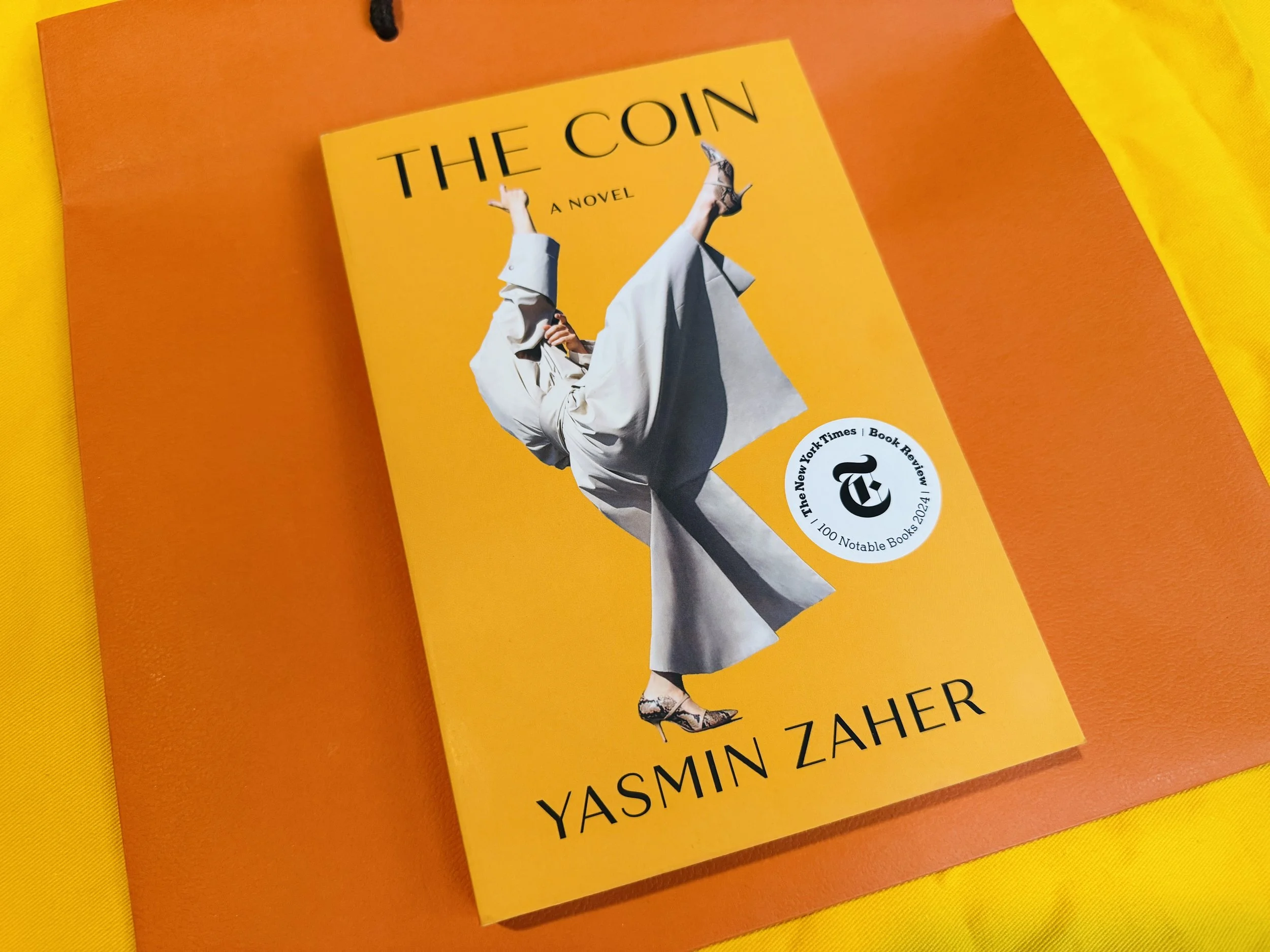
‘The Coin’ by Yasmin Zaher

The Coin

January 12, 2026

Rating: 4.5 stars

As I was flying out of SFO over winter break, I stopped by Compass Books, a well-curated Barnes & Noble independent offshoot. While my kids roamed around, I made my way through the fiction section and came across The Coin. In one simple word, it was fabulous.

The Coin follows a young Palestinian woman living in New York, whose life begins to unravel as her relationship to money, cleanliness, beauty, and power turns increasingly obsessive. Through her work as a teacher and her entanglements with wealth and luxury, the novel examines how identity fractures when control becomes a substitute for meaning.

The novel feels deliberately deranged—a controlled descent into obsession. Zaher fixates on filth and cleanliness and on the unbearable discomfort of believing there is a coin lodged inside her body, resisting logic or medical resolution. The narrator’s CVS Retreat ritual of scrubbing her body for several hours with multiple drugstore detergents, is her attempt at treatment. Her descriptions of curdled skin, soap, dirt, and residue after a bath are visceral - the refuse is her. Why do we become disgusted by what has molted from our bodies, when moments earlier it was an invisible layer inseparable from the self? “I was flushed, clean. I had shed what needed to be shed. At the end of the day it was just garbage. But I had oiled and spiced it up like it was a celebratory leg of lamb.”Paradoxically, as her cleaning compulsions intensify, she begins to intentionally soil both her physical appearance and her reputation.

The coin itself becomes the quiet center of the novel: a lodged object that refuses to be expelled. It represents what cannot be scrubbed away—trauma, class anxiety, displacement, the uneasy inheritance of money and power. Her fixation on cleanliness feels less about hygiene than about control, the hope that if every contaminant is eliminated, something unbearable inside her might finally disappear. The novel insists otherwise.

She moves through men she does not love, yet allows herself to be used, despite her apparent fluency in beauty, class, and their unspoken rules. That contradiction comes into focus with Trenchcoat, a luxury-goods arbitrager she pursues romantically. Through him, she enters a Hermès resale scheme governed by a logic that feels more fixed than nature itself: “Every year, regardless of poverty, war, or famine, the price of the Birkin bag increases.” What begins as satire settles into something colder—luxury as a closed system, impervious to consequence.

The novel reminded me of The Bell Jar—another young woman’s attempt to understand herself beyond accepted norms. While it was gendered expectation for Esther Greenwood’s character, for our narrator in The Coin, wealth, fashion, and education are the catalysts of her undoing. Later on in the novel, the garden she transforms her apartment into becomes an attempt at rebirth. She tries to become one with the earth, and as a reader you feel the devastation of beauty returning to something plain and repulsive. What begins vibrant and alive decays into an odorous heap of rot. Growth and decay are inseparable.

Overall, the writing is compulsively readable and frequently shocking. It reads as if Vogue briefly lost its mind, descended into literary madness, and then re-emerged without explanation. Zaher captures the absurdity of class, the intimacy of obsession, and the uncomfortable truth that self-knowledge does not always arrive gently, or leave us intact.
In fiction Tags strong female lead, palestine, new york city, NYT notable book, identity, 4.5 stars, classism
Comment

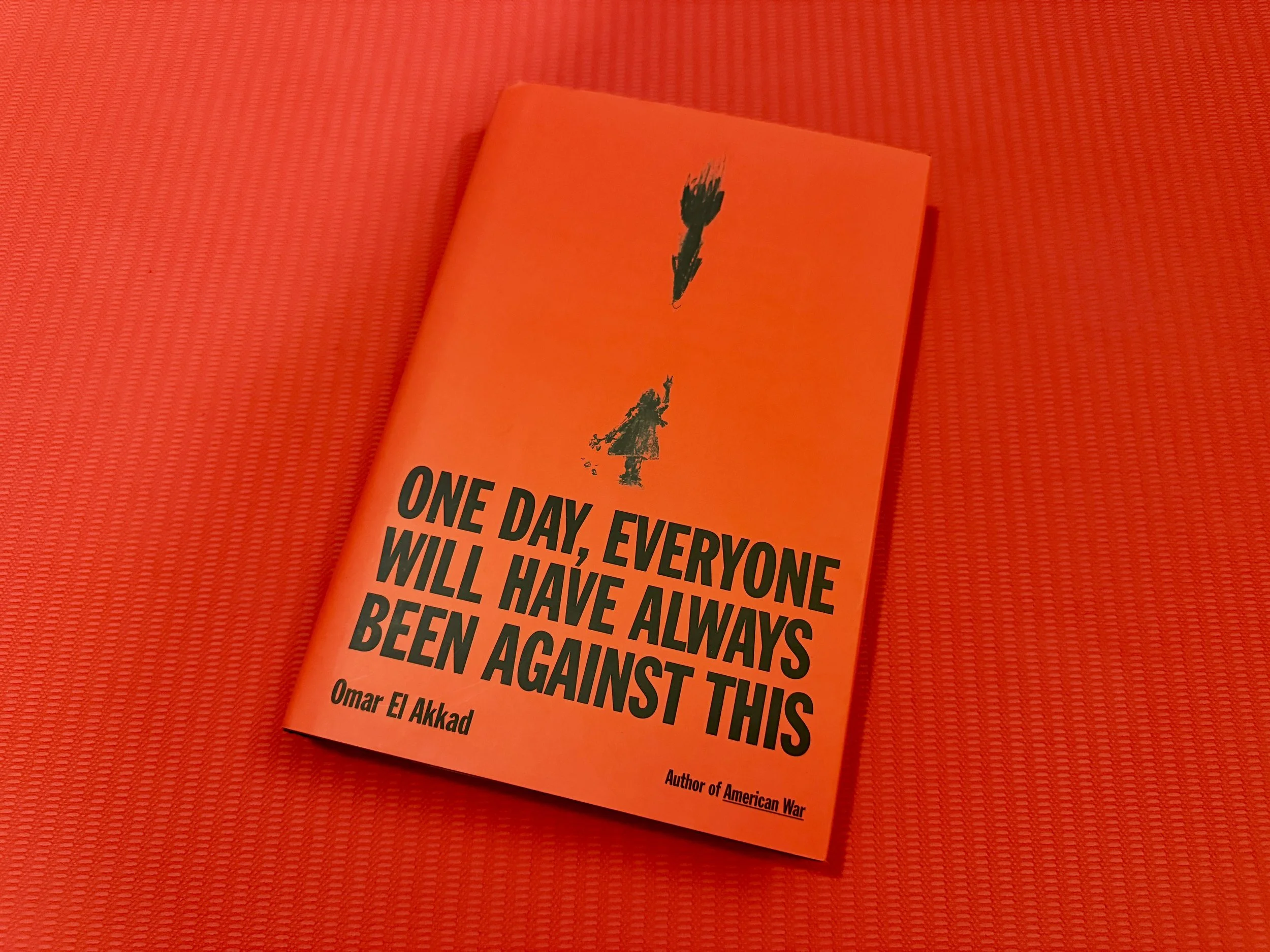
‘One Day, Everyone Will Have Always Been Against This’ by Omar El Akkad

One Day, Everyone Will Have Always Been Against This

January 12, 2026

Review: 5 stars

Omar El Akkad’s latest non-fiction book examines power, violence, and the language used to describe them, with significant attention to Gaza. Drawing on journalism, history, and personal reflection, the book considers what responsibility remains for those who witness events from a distance.

In particular, when the author takes a more journalistic and rhetorical lens on the genocide in Gaza, he makes a poignant point about the truths of the violence that occurred and who the victims were. What is undebatable is that lives were snatched too early, rendered collateral damage in the ongoing theatre of revenge. “When the past is past, the dead will be found to not have partaken in their own killing. The children will not have pulled their own limbs out and strewn them all over the makeshift soccer pitch.”

El Akkad fixates at length on the role of language in covering this conflict—the contortions Western media goes through to avoid blame, to preserve a veneer of objectivity, while failing what he argues is journalism’s moral mandate: to report facts. “Accidentally, a stray bullet found its way into the van ahead, and that killed a three- or four-year-old young lady,”reported by a British newscaster, is a sobering example of how traditional media cannot bring itself to speak forthrightly about a toddler being murdered at a military checkpoint.

I do not come to this book as an expert. My understanding of Israel–Palestine largely stops at high school history, and I would not claim intimacy with the full scope of events since October 7, 2023. What unsettled me most about El Akkad’s writing was not simply what I learned, but what it revealed about the narrowness of the viewpoints I tend to encounter. I am often spoon-fed stories from Facebook, YouTube, and other social media algorithms that quietly reinforce what I already believe - or think I know.. When I linger too long on a video or a post, those moments are already reshaping what my scrolling will reveal next, and I often find myself snapping back to what is safe, known, and accepted.

In the true spirit of setting New Year’s resolutions, I found myself wondering what El Akkad’s call to action might be in the face of such pain. His concept of “negative resistance” was particularly compelling—almost a foot-in-the-door path for bystanders who want to do more but are scared to start. He defines it as “refusing to participate when the act of participation falls below one’s moral threshold,” including seemingly small acts such as changing which businesses we consume from or refusing to attend certain events. It struck me as a practice many people with strong moral compasses already exercise: the deliberate introduction of friction into one’s life, a willingness to inconvenience oneself in the service of something larger.

I am grateful that I read this book as my first of 2026. It was an abrupt reminder to question what I see and hear, and to intentionally seek out divergent perspectives in order to understand any situation more honestly. I exercise this instinct readily in my professional life, but my capacity for active curiosity in my personal life has likely atrophied. In its place, another muscle has likely grown stronger: indifference. Perhaps this is true for many of us, conditioned by COVID, by constant crisis, by the daily shocks of modern news. As El Akkad writes, “No atrocity is too great to shrug away now, the muscles of indifference having been sufficiently conditioned.” This book does not allow us to shrug.

In current events, non-fiction Tags war, national book award, palestine, journalism, 5 stars, emotional

Latest Posts

Featured
science fiction, apocalypse, LGBTQ, romance, culinary, 4 stars, asian literature
Land of Milk and Honey
science fiction, apocalypse, LGBTQ, romance, culinary, 4 stars, asian literature
strong female lead, palestine, new york city, NYT notable book, identity, 4.5 stars, classism
The Coin
strong female lead, palestine, new york city, NYT notable book, identity, 4.5 stars, classism
war, national book award, palestine, journalism, 5 stars, emotional
One Day, Everyone Will Have Always Been Against This
war, national book award, palestine, journalism, 5 stars, emotional
fiction, mid-life crisis, healing, books, korean lit, 4.5 stars
Welcome to the Hyunam-Dong Bookshop
fiction, mid-life crisis, healing, books, korean lit, 4.5 stars
3 stars, Japanese literature, crime, mystery, love
The Devotion of Suspect X
3 stars, Japanese literature, crime, mystery, love
fantasy, apocalypse, life & death, family, los angeles, magic, 4 stars
Catchpenny
fantasy, apocalypse, life & death, family, los angeles, magic, 4 stars
italian literature, motherhood, marriage, infidelity, identity, strong female lead, 5 stars, family
Forbidden Notebook
italian literature, motherhood, marriage, infidelity, identity, strong female lead, 5 stars, family
LGBTQ, man booker prize, womanhood, spain, NYT notable book, 4 stars, coming of age
Hot Milk
LGBTQ, man booker prize, womanhood, spain, NYT notable book, 4 stars, coming of age
spiritual, BBC 100 Novels, love, mysticism, 4 stars
The Forty Rules of Love
spiritual, BBC 100 Novels, love, mysticism, 4 stars
short stories, science fiction, apocalypse, asian literature, 3 stars
Your Utopia
short stories, science fiction, apocalypse, asian literature, 3 stars