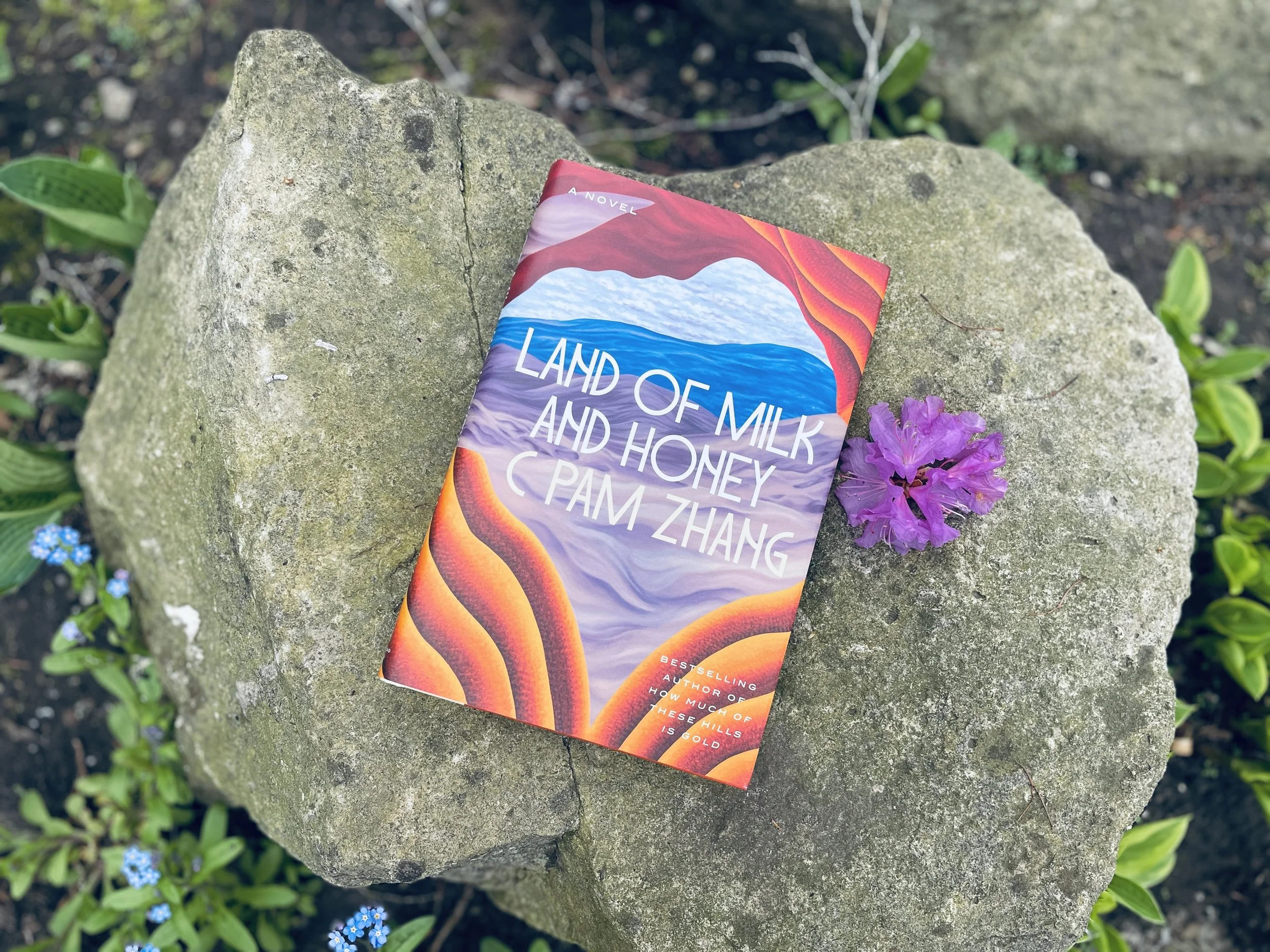
Review: 4 stars
My older sister is a voracious reader; I think our “to be read” stacks could rival each other in height. I always love unwrapping her birthday gifts to me, which are inevitably thoughtful reads. ‘Land of Milk and Honey’ was one she gave me a few years ago, and I’m glad I finally got to it.
Pre-pandemic, my husband and I were restaurant aficionados. At times, we (annoyingly) lamented that we were “done” with Michelin restaurants, no longer shocked by avant-garde cuisine. We had become the characters in Netflix’s ‘The Menu’ - pretentious, exacting, and inured by foams and gels. C. Pam Zhang wrote this novel during the pandemic, when everyday pleasures and shared experiences felt fragile. By setting the story in a near-future world of scarcity, Zhang explores how survival, ethics, and pleasure collide - and how what we take for granted, like a beautiful meal, can expose what’s broken in the world.
The narrator is a poor, French-trained chef recruited by a reclusive billionaire and his daughter, Aida, to work at a mountaintop bio-sanctuary in Italy. Below them, the world has been choked by smog and ash; crops and biodiversity are gone, and most people survive on mung-protein flour. On the mountain, she prepares lavish meals from exotic and extinct ingredients - golden chimpanzees, mammoth, quail, truffles, lamb’s ears. “If the land of milk and honey produced no further milk, this meal proclaimed, then we would sup of the last like kings and queens.” These dinners are not just indulgence; they are fundraising performances for an elite list of donors hoping to buy their way into a future agricultural reserve.
She becomes intoxicated by this world of rare ingredients and excess, even cosplaying as Aida’s deceased mother to preside over fundraising dinners, lending them a spiritual gravity. She and Aida fall into a sensual, consuming relationship, which deepens her ethical unease about living in luxury while the rest of the world starves. At the center of the novel is the belief that wealth and ingenuity can always delay catastrophe; that money can keep pushing collapse one meal further away.
When Aida asks why the narrator trained in French cuisine, her answer is devastating in its honesty: “I refused to be stuck...in the smallness of my mother’s life. In a fixed notion of cooking, my abilities, my worth as ascribed to my Chineseness my Asianness my smallness my womanness my perpetual foreignness - myself. French cuisine is respected everywhere. To earn the chance to cook real food, I needed that respect.” That word - real - hangs over the novel like a dare. It evokes The Matrix question: would you rather live in a beautiful illusion or the raw grit of reality? How many honeyed figs or luscious gougères is truth worth?
Zhang’s writing is deeply immersive; you feel the textures of fat, salt, sugar, ash, and rot. Land of Milk and Honey is unsettling, indulgent, and quietly devastating. It leaves you with a lingering discomfort about what we consume, what we ignore, and what we’re willing to trade for our morality.