• Booklish
  • Index
  • Blog
  • Shelf
  • About
  • Ratings
  • Contact
Menu

Booklish

Delectable reads for bibliophiles
  • Booklish
  • Index
  • Blog
  • Shelf
  • About
  • Ratings
  • Contact

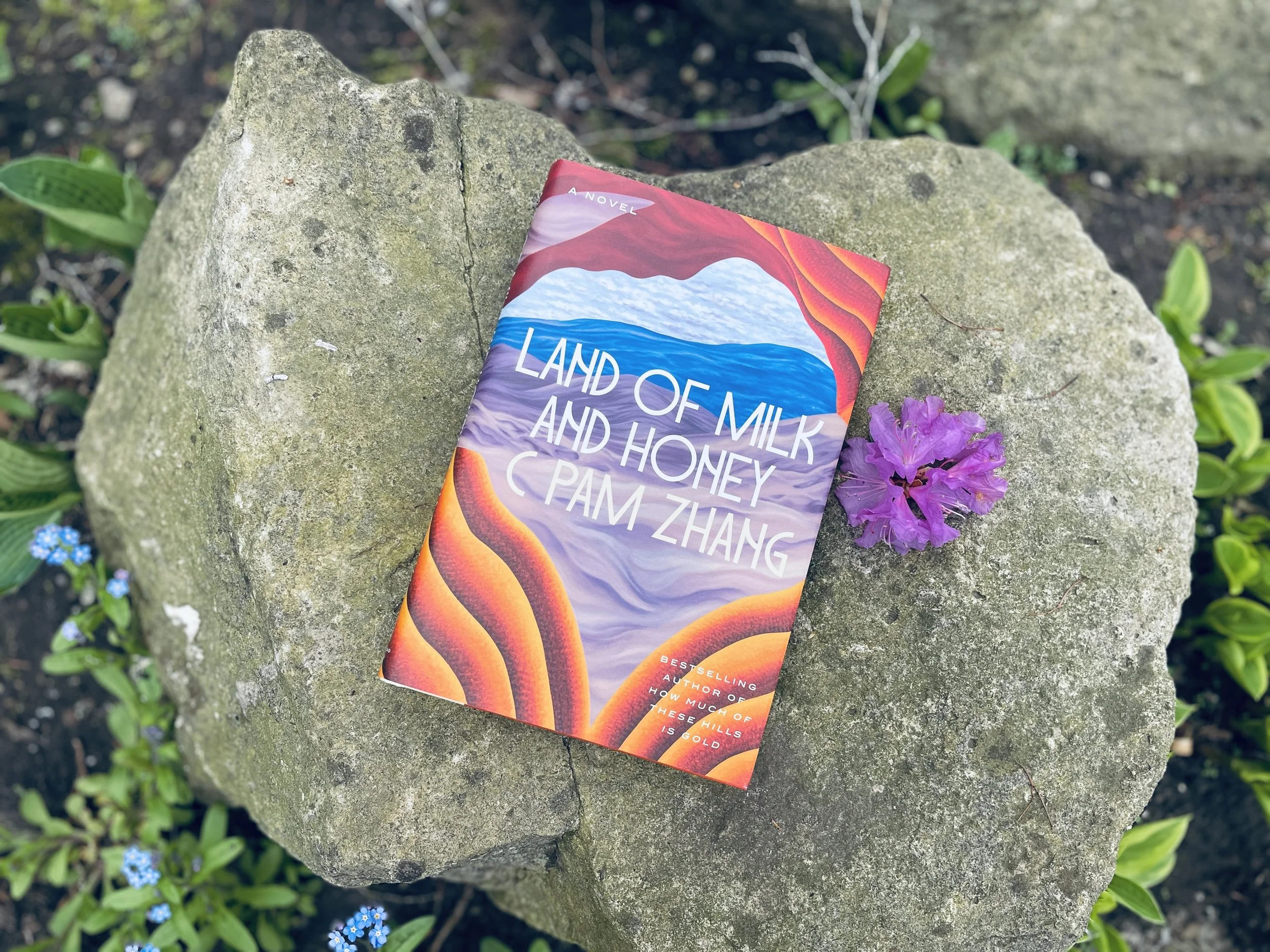
'‘Land of Milk and Honey’ by C Pam Zhang

Land of Milk and Honey

January 25, 2026

Review: 4 stars

My older sister is a voracious reader; I think our “to be read” stacks could rival each other in height. I always love unwrapping her birthday gifts to me, which are inevitably thoughtful reads. ‘Land of Milk and Honey’ was one she gave me a few years ago, and I’m glad I finally got to it.

Pre-pandemic, my husband and I were restaurant aficionados. At times, we (annoyingly) lamented that we were “done” with Michelin restaurants, no longer shocked by avant-garde cuisine. We had become the characters in Netflix’s ‘The Menu’ - pretentious, exacting, and inured by foams and gels. C. Pam Zhang wrote this novel during the pandemic, when everyday pleasures and shared experiences felt fragile. By setting the story in a near-future world of scarcity, Zhang explores how survival, ethics, and pleasure collide - and how what we take for granted, like a beautiful meal, can expose what’s broken in the world.

The narrator is a poor, French-trained chef recruited by a reclusive billionaire and his daughter, Aida, to work at a mountaintop bio-sanctuary in Italy. Below them, the world has been choked by smog and ash; crops and biodiversity are gone, and most people survive on mung-protein flour. On the mountain, she prepares lavish meals from exotic and extinct ingredients - golden chimpanzees, mammoth, quail, truffles, lamb’s ears. “If the land of milk and honey produced no further milk, this meal proclaimed, then we would sup of the last like kings and queens.” These dinners are not just indulgence; they are fundraising performances for an elite list of donors hoping to buy their way into a future agricultural reserve.

She becomes intoxicated by this world of rare ingredients and excess, even cosplaying as Aida’s deceased mother to preside over fundraising dinners, lending them a spiritual gravity. She and Aida fall into a sensual, consuming relationship, which deepens her ethical unease about living in luxury while the rest of the world starves. At the center of the novel is the belief that wealth and ingenuity can always delay catastrophe; that money can keep pushing collapse one meal further away.

When Aida asks why the narrator trained in French cuisine, her answer is devastating in its honesty: “I refused to be stuck...in the smallness of my mother’s life. In a fixed notion of cooking, my abilities, my worth as ascribed to my Chineseness my Asianness my smallness my womanness my perpetual foreignness - myself. French cuisine is respected everywhere. To earn the chance to cook real food, I needed that respect.” That word - real - hangs over the novel like a dare. It evokes The Matrix question: would you rather live in a beautiful illusion or the raw grit of reality? How many honeyed figs or luscious gougères is truth worth?

Zhang’s writing is deeply immersive; you feel the textures of fat, salt, sugar, ash, and rot. Land of Milk and Honey is unsettling, indulgent, and quietly devastating. It leaves you with a lingering discomfort about what we consume, what we ignore, and what we’re willing to trade for our morality.

In fiction Tags science fiction, apocalypse, LGBTQ, romance, culinary, 4 stars, asian literature

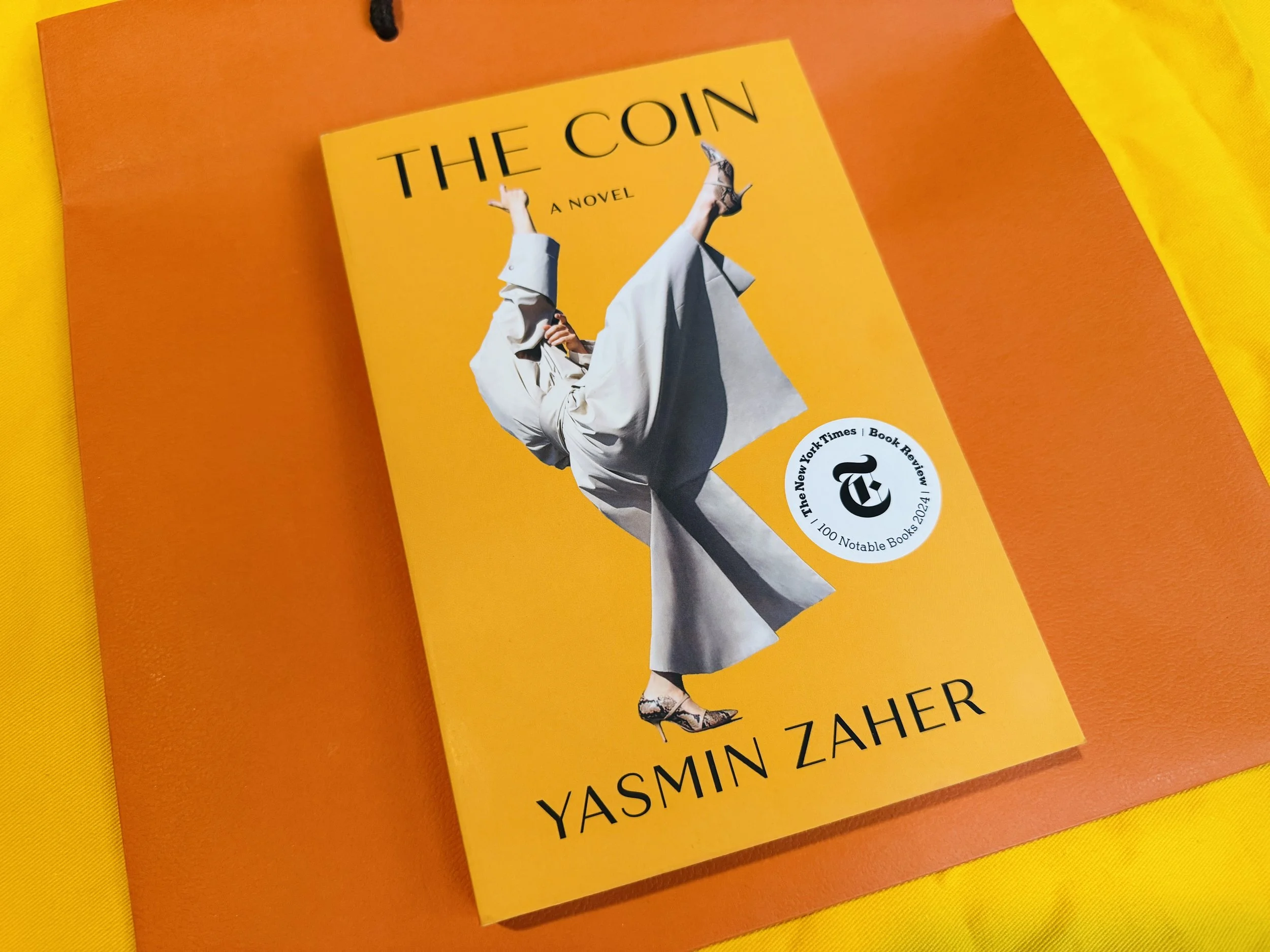
‘The Coin’ by Yasmin Zaher

The Coin

January 12, 2026

Rating: 4.5 stars

As I was flying out of SFO over winter break, I stopped by Compass Books, a well-curated Barnes & Noble independent offshoot. While my kids roamed around, I made my way through the fiction section and came across The Coin. In one simple word, it was fabulous.

The Coin follows a young Palestinian woman living in New York, whose life begins to unravel as her relationship to money, cleanliness, beauty, and power turns increasingly obsessive. Through her work as a teacher and her entanglements with wealth and luxury, the novel examines how identity fractures when control becomes a substitute for meaning.

The novel feels deliberately deranged—a controlled descent into obsession. Zaher fixates on filth and cleanliness and on the unbearable discomfort of believing there is a coin lodged inside her body, resisting logic or medical resolution. The narrator’s CVS Retreat ritual of scrubbing her body for several hours with multiple drugstore detergents, is her attempt at treatment. Her descriptions of curdled skin, soap, dirt, and residue after a bath are visceral - the refuse is her. Why do we become disgusted by what has molted from our bodies, when moments earlier it was an invisible layer inseparable from the self? “I was flushed, clean. I had shed what needed to be shed. At the end of the day it was just garbage. But I had oiled and spiced it up like it was a celebratory leg of lamb.”Paradoxically, as her cleaning compulsions intensify, she begins to intentionally soil both her physical appearance and her reputation.

The coin itself becomes the quiet center of the novel: a lodged object that refuses to be expelled. It represents what cannot be scrubbed away—trauma, class anxiety, displacement, the uneasy inheritance of money and power. Her fixation on cleanliness feels less about hygiene than about control, the hope that if every contaminant is eliminated, something unbearable inside her might finally disappear. The novel insists otherwise.

She moves through men she does not love, yet allows herself to be used, despite her apparent fluency in beauty, class, and their unspoken rules. That contradiction comes into focus with Trenchcoat, a luxury-goods arbitrager she pursues romantically. Through him, she enters a Hermès resale scheme governed by a logic that feels more fixed than nature itself: “Every year, regardless of poverty, war, or famine, the price of the Birkin bag increases.” What begins as satire settles into something colder—luxury as a closed system, impervious to consequence.

The novel reminded me of The Bell Jar—another young woman’s attempt to understand herself beyond accepted norms. While it was gendered expectation for Esther Greenwood’s character, for our narrator in The Coin, wealth, fashion, and education are the catalysts of her undoing. Later on in the novel, the garden she transforms her apartment into becomes an attempt at rebirth. She tries to become one with the earth, and as a reader you feel the devastation of beauty returning to something plain and repulsive. What begins vibrant and alive decays into an odorous heap of rot. Growth and decay are inseparable.

Overall, the writing is compulsively readable and frequently shocking. It reads as if Vogue briefly lost its mind, descended into literary madness, and then re-emerged without explanation. Zaher captures the absurdity of class, the intimacy of obsession, and the uncomfortable truth that self-knowledge does not always arrive gently, or leave us intact.

In fiction Tags strong female lead, palestine, new york city, NYT notable book, identity, 4.5 stars, classism
Comment

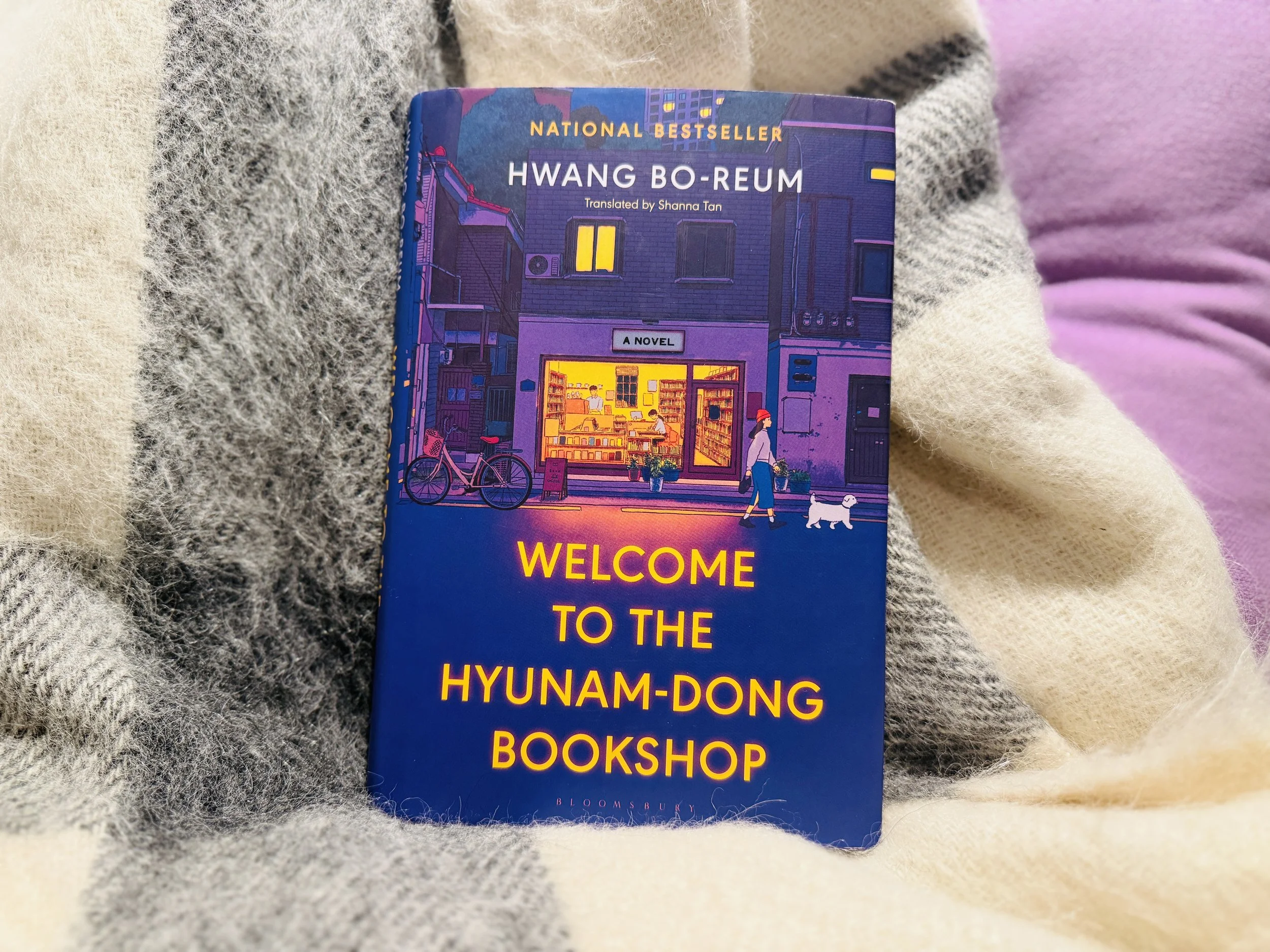
‘Welcome to the Hyunam-Dong Bookshop’ by Hwang Bo-Reum

Welcome to the Hyunam-Dong Bookshop

January 22, 2025

Review: 4.5 stars

Earlier in October, I was looking for a warm and cozy read - something that would be a salve for the soul. I adore books about booklovers, bookshops and writing, so when I saw ‘Welcome to the Hyunam-Dong Bookshop’ featured on the Foyle’s homepage, I knew I had to read it.

I had recently decided to make a career change, and had been musing about how the next chapter would fit with the life I desire to lead. Coincidentally, Hwang Bo-Reum’s novel about Yeongju, a burnt out working professional who opens a bookshop to heal her soul, perfectly captured my sentiments. “…[T]he problem is that our society is too obsessed with work, and working takes away too many things from us. “It’s like we surface from the depths of work to get a breather, only to feel thoroughly spent. And when we return home after a long workday, we no longer have energy for leisure time or hobbies…When significant proportions of our time are spent working, recuperating from work, compensating for work, or doing the many things necessary in order to find, prepare for, and hold on to work, it becomes increasingly difficult to say how much of our time is truly our own”. This quoted passage from David Frayne’s ‘The Refusal of Work’, perfectly encapsulates one of the key contemplations in the novel - how to rest and work intentionally, in harmony.

The book’s atmosphere comes through powerfully - a particular feeling was the driving force of the novel, instead of plot or formal character development. The writing appeared effortless, matter-of-fact, simple and clean. This helped evoke a tranquil, drifting quality to each passage. Even moments of conflict or apprehension have rounded edges, dulled by each character’s inner contemplation which we are privy to.

The cast of characters also befriends the reader, each in his or her way. Minjun, once a striving university graduate, settles into the role of the perfectionist barista. Sangsu becomes a begrudging book sommelier to bookshop patrons (as well as the cashier). Jungsuh, Mincheol, Jimi and Seungwoo, each with their quiet backstories, have revolving seats at the sparse tables in the bookshop. The rise and fall of each of their narrative arcs plays out amongst the comings and goings of the daily bookshop routine. I found myself at times casting judgement on a decision a character had made, and then actively and mindfully retracting my opinion. The book was a good reminder that each person is processing, and making progress at their own pace, towards their unique goals, even if staying still is part of that progress.

In the Author’s Note, Bo Reum writes: “I wanted to write a novel evoking the mood of…a space we can escape to, a refuge from the intensity of daily life where we can’t even pause to take a breather. A space to shelter us from the harsh criticisms whipping us to do more, to go faster. A space to snuggle comfortably for a day.” This book was a resting stone for me, and I hope it is for other readers who are seeking similar solace.

In fiction Tags fiction, mid-life crisis, healing, books, korean lit, 4.5 stars
Comment

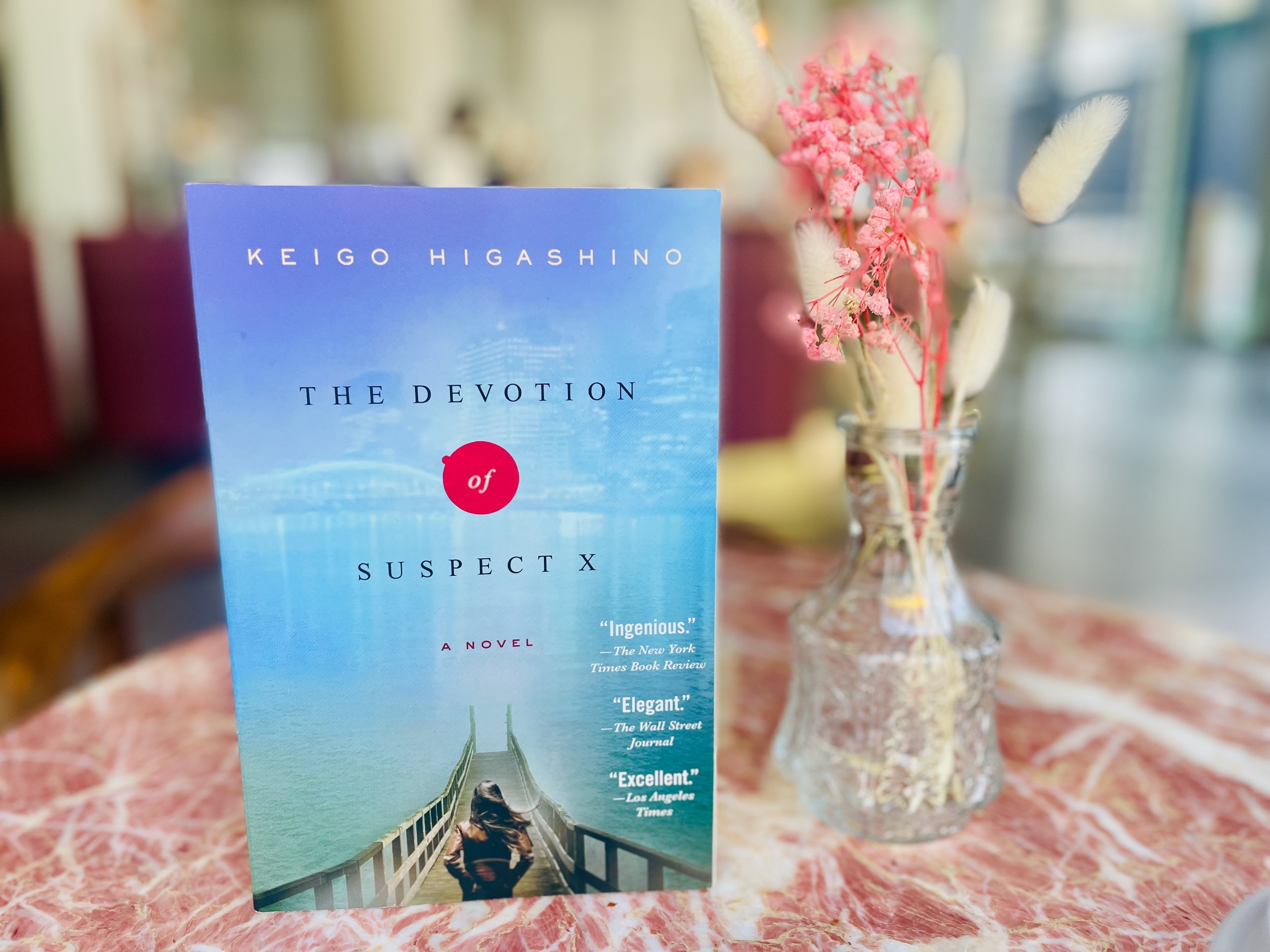
‘The Devotion of Suspect X’ by Keigo Higashino

The Devotion of Suspect X

May 29, 2024

Review: 3 stars

Since moving out to Oakville, I have been looking for a great book club to join. After digging around, I wasn’t able to find any group that really matched what I was looking for - acclaimed reads, literary discussion and serious book lovers. A book club based in Toronto ended up hitting the mark - and I read ‘The Devotion of Suspect X’ with every intention of making the late evening trek out to join the discussion last night…only to be foiled by kidcare duty for my two rambunctious little ones.

‘The Devotion of Suspect X’ is one in a series of sophisticated and well-written whodunnits by Keigo Higashino, featuring a brilliant professor Yukawa and his shrewd detective friend Kusanagi. After a single mother, Yasuko, murders her abusive ex-husband in the opening chapters of this mystery, the reader embarks with her on a tense and cerebral journey to avoid capture by the police. She is aided by an oddball fairy godmother in the shape of her heavyset, middle-aged, taciturn neighbour Ishigami. He harbours ritual adoration for Yasuko, and channels his affection into helping to conceal the murder and create a trail of deflection for Kusanagi to erroneously follow. The novelty and brilliance of the story surfaces in the chessboard that Ishigami has set up for the detectives and his old college compatriot - Yukawa. Ishigami consistently outsmarts them through details and tactics, ending with a mind-bending caper that has all but Yukawa fooled.

Additional tension is injected as Yasuko begins to feel affection for an old acquaintance - Kudo. Once Ishigama learns of this budding sentiment, his purist devotion is put to the test. Yasuko, who once feared the shackles of prison, begins instead to fear that she must cage her heart in order to maintain her physical freedom.

I found ‘The Devotion of Suspect X’ to be an easy, enjoyable read with a clever premise, and enough suspense to keep me engaged throughout. I did feel it to be lacking additional depth (e.g., exploration of more universal themes, innovative narration), and aside from Ishigami, the remainder of the characters were relatively flat. Not a regrettable read at all, but also unlikely to be one that I remember in years to come.

In fiction Tags 3 stars, Japanese literature, crime, mystery, love
Comment

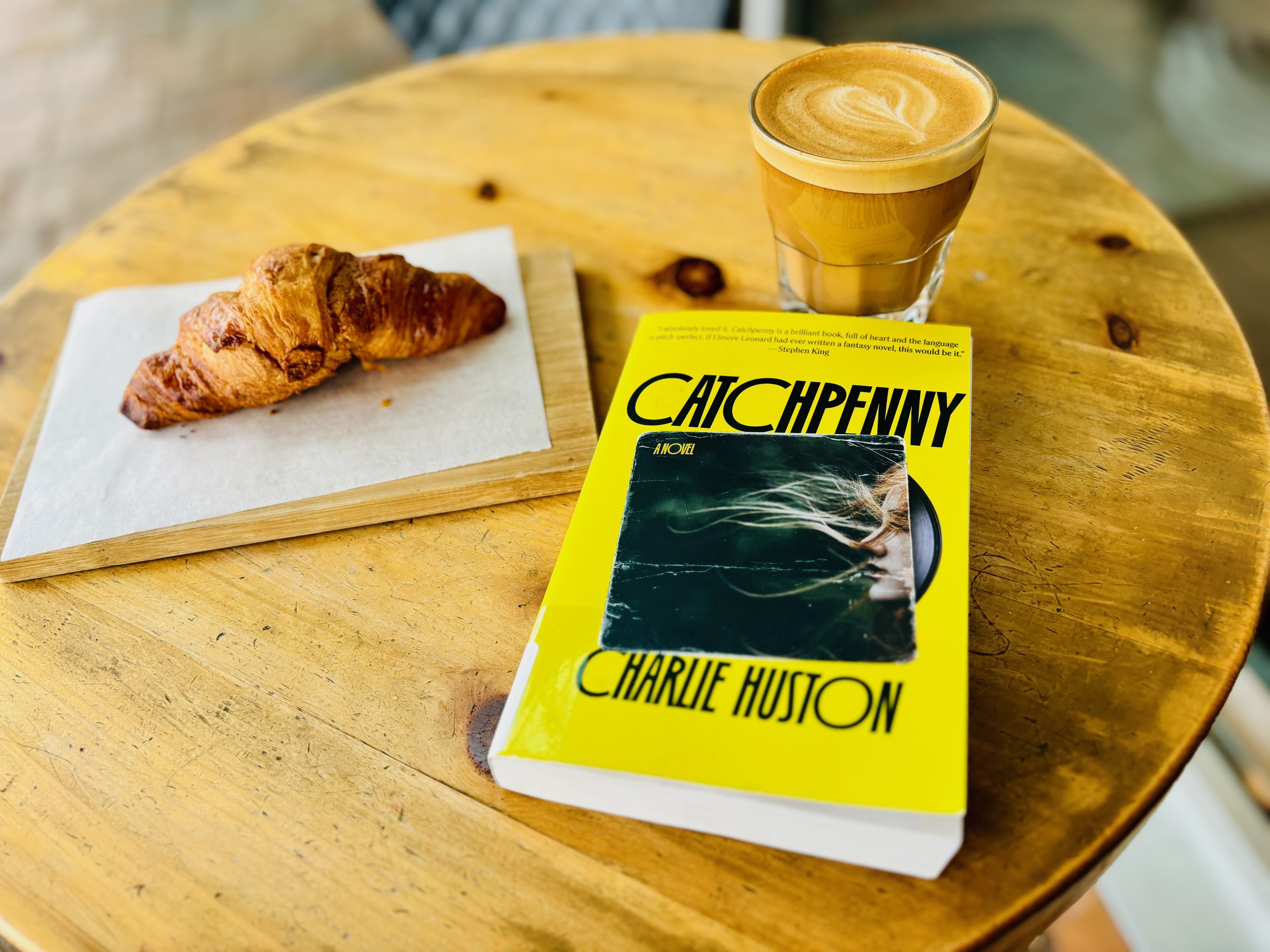
‘Catchpenny’ by Charlie Huston

Catchpenny

May 29, 2024

Review: 4 stars

A week ago, I took my two children to the public library, and somehow managed to distract them enough to buy a few minutes to roam the adult floor. ‘Catchpenny’ was on a shelf of new books, and the premise of world redemption through witchcraft, suicide cults and a depressive anti-hero, was enough to catch my eye.

I settled in at one of my favourite coffee shops - Vereda Central Roasters - a few days later and launched headfirst into Charlie Huston’s cleverly constructed world. In his version of our today’s world, reflections can be “limned” from mirrors and transformed into real-life dopplegangers (albeit comprised of glass instead of flesh and blood.) Magic - or ‘mojo’ as it is referred to in the novel - is real. Raw emotions and revered rituals can birth powerful forces, which are channeled into inanimate objects - ‘curiosities’. This power can be tapped for many self-aggrandizing purposes, in addition to enabling travel between mirrors in disparate locations.

We meet Sid Catchpenny, our protagonist, as he is sought out by an estranged friend, Francois, to help a mother find her missing daughter, Circe. What ensues is a highly captivating and intricately woven thriller where we are constantly left wondering where the line between good and evil lies. Each of the countless characters - Monroe, Sue, Francois, Abigail, Circe, Carpenter, Sid - are desperately flawed, and also deeply misunderstood, adding to the complexity of assigning the roles of heroes and villains. Huston takes his time to unravel the twisted yarn connecting everyone, and in doing so, exposes to the reader that Sid, our guide through this narrative funhouse, fundamentally knows nothing…meaning we also know nothing until the climax of the novel.

I found the story well paced and easy to lose myself in. It was reminiscent of ‘The Matrix’ for me, with vocabulary and rules used to effectively cast the structure for an alternative reality. For example, the omnipresence of “mojo” throughout the story, establishing “courses” to direct the mojo to “vehemancers”, ‘manikins’ as the “limned” reflections, and the time-bound “Vestibule” in between mirrors. Sid is also a refreshing protagonist - self-deprecating, honest and a bit of a maverick. Popular cultural touchstones are catalysts of the plot and work very effectively to draw contemporary parallels to our current lived experiences - for example, Monroe’s parties are reminiscent of Woodstock or Coachella, Gyre is an interpretation of popular MMPORGs and youth’s timeless pursuit of meaning at all costs.

It was an excellent escapist read that also provoked discussion on how the power of emotion can be captured and used as a force. It asks whether apocalypse is evil, or if it can be seen as a renewal - the creation of something new from the dredges of a destabilizing and disintegrating world. And if renewal is possible, how can a new world order be constructed to be more equitable and selfless. ‘Catchpenny’ is definitely worth an exploration for a curious, fantasy-loving reader.

In fiction, fantasy Tags fantasy, apocalypse, life & death, family, los angeles, magic, 4 stars
Comment

‘Forbidden Notebook’ by Ana de Cespedes

Forbidden Notebook

May 7, 2024

Review: 5 stars

During a recent business trip to London, I took a detour to the airport to visit Foyles, one of the largest and most impressive local bookstores. I was in heaven - imagine five stories of neatly stacked books, with feature tables and end-caps tiled with intriguing (not only bestselling) titles! I was specifically looking for ‘Forbidden Notebook’, which I have been wanting to read for a while.

The novel is set in 1950s Rome, and follows the inner narrative of Valeria Cossati, a committed mother to two, dedicated wife and office worker. On impulse in a tobacco shop, Valeria purchases a black notebook, in which she secretly chronicles all the things she does not say to those around her. This simple act of subterfuge - writing her thoughts in a diary - is a rare selfish indulgence for Valeria, and it sparks a re-education and re-examination of her entire life. It also unleashes a pandora’s box of deceit that infiltrates the household. Valeria’s daughter Mirella becomes ensnared in a scandalous romance with the much older Cantoni; her son Riccardo goes to the point of no return with his girlfriend Marina, and her husband Michele pursues a fraught partnership with her filmmaker friend Clara. These tribulations are tirelessly archived by Valeria in the midnight shadows. As she enters into evidence the thousand ways that her family transgresses against society, she realizes as well that they transgress against her rights to individualism. As she sheds her titles of ‘mamma’, ‘daughter’, ‘wife’, ‘friend’, ‘breadwinner’, ‘employee’, ‘paramour’, she simultaneously begins the process of reclaiming ‘Valeria’ for herself.

Elena Ferrante (of ‘My Brilliant Friend’ fame), listed Alba de Cespedes as an inspiration ina , single-handedly reviving recent interest in works that are over seventy years old. But the ideas are as fresh as ever. I would dub De Cespedes to be the 1950s predecessor to Esther Perel, a globally recognized couples therapist and love expert. The incisiveness of de Cespedes’ insights into motherhood and marriage, and how these come to define and unravel one another, was astonishing.

Throughout my reading, I found myself shaking my head in admiration for how perfectly crafted and revelatory her writing is. For example, as Valeria finds herself struggling to connect with her husband of over twenty years, she writes “I felt an uncontrollable sadness rising in me. I’m afraid that because my way of being seems so natural to him it no longer has any value in his eyes”. Then later, she attributes lack of intimacy in marriage to the following: “It’s because we feel that husband and wife who unite in an obscure, silent relationship, after talking all day about domestic matters, about money, after frying the eggs, washing the dirty plates, are no longer obeying a happy, joyful desire for love but a gross instinct like thirst, or hunger, an instinct that is satisfied inherent dark, rapidly, eyes closed. How monstrous.” Or even more poignantly, when forcing her daughter to admit a painful fault: “She spoke concisely, as if to consume as quickly as possible the need to wound herself and to wound”.

Even more interesting are the artificial narratives that Valeria constructs, even as she writes in the notebook - the one place she can be freely honest. Her reluctance and inability to piece together her husband’s infidelity, and how she conjures up a nemesis in her future daughter-in-law, become fictions that are logged as truths. The notebook in the end becomes a version of herself that Valeria vehemently denies, burning it to ashes to return to a skin she wants to wear again - that of the weary, saintly matriarch that gives everything and receives nothing.

One review of the book simply said it was “incendiary” and I cannot agree more wholeheartedly. I am in awe of how deftly de Cespedes took simple moments of everyday life and wove them into an intricate meditation on womanhood. I highly recommend this book to anyone who is a lover of fiction at its finest, and to every mother who feels even the slightest bit unmoored.

In fiction, translated works Tags italian literature, motherhood, marriage, infidelity, identity, strong female lead, 5 stars, family

‘Hot Milk’ by Deborah Levy

Hot Milk

May 2, 2024

Review: 4 stars

I love browsing bookstores, especially with my sisters. On a trip to Toronto last fall, my older sister shared some of her favourite reads with me as we were perusing the stacks at Type Books on Queen. The one that got me intrigued was ‘Hot Milk’ by Deborah Levy. Shortlisted for the 2016 Man Booker, the novel follows Sofia and her mother Rose, on their Hail Mary journey to Almería, Spain for a cure for Rose’s mysterious limb paralysis.

In the opening pages, we learn that 25-year old Sofia is being inducted into adulthood, awash in the jarring taste of one’s first major failure. “The dream is over for me. It began when I left my lame mother alone to pick the pears from the tree in our East London garden that autumn I packed my bags for university…It ended when she became ill and I abandoned my Ph.D.” Over the course of the novel, we see Sofia become the foil to her previous self as she wades into new shapes and forms of being. She changes her occupation from ‘Waitress’ to ‘Monster’ on a health intake form over subsequent visits to a seaside first-aid hut. The stifling heat, incessant jellyfish stings and her pent up madness and desire have swirled into a combustible being. Sofia has emerged anew. She triumphantly frees a murderous dog from an abusive owner, takes a first aid student to be a lover and then takes Ingrid, a seamstress and her muse, also as a lover.

The irresistible tide of the Andalusian pilgrimage sucks Sofia in and upends the predictable prison she has created in her mind and the physical constraints of being her mother’s legs. At one point, Rose considers amputation to rid herself of the limbs that fail her. In actuality, her limbs are already severed from her, yet tethered to her - Sofia is her only source of mobility. A daughter as an extension, yet separation of one’s own self. As the novel reaches its conclusion, the severance becomes permanent - mother and daughter are more estranged than ever. One living an ever smaller, shorter, boxed-in life, and the other bursting with possibility, melted by the hot Spanish sun into something malleable, finding its organic shape day by day.

The writing is gorgeous, experimental and bold. Passages read like poetry, and Levy plays with form throughout - bulleted lists punctuate chapters, as do grammar-defying lines such as “I was flesh thirst desire dust blood lips cracking feet blistered knees skinned hips bruised”. Just like hot milk, the writing froths over the reader, with only a pale residue remaining long past the last page, a stubborn mark that refuses to be forgotten. A searing, complex and enthralling read.

In fiction Tags LGBTQ, man booker prize, womanhood, spain, NYT notable book, 4 stars, coming of age

The Forty Rules of Love by Elif Shafak

The Forty Rules of Love

April 28, 2024

Review: 4 stars

On a business trip to Rome in February, I had a bit of extra time and popped into The Otherwise Bookstore on Via del Governo Vecchio. What a charming bookshop! The entryway was flanked by clothbound classics, with deeper cuts of translated Italian texts tucked in the back, and a very robust selection of contemporary fiction and poetry in the middle sanctum. I was looking for something I could read while dining solo at Armando al Pantheon - I had managed to snag a last minute reservation.

I had never heard of the BBC’s ‘100 Novels That Shaped Our World’ list, but was intrigued by the great reviews of the novel online, and I was also looking to discover new authors. I was lucky in my selection - the complexity of the storylines, vacillating between present and past, fact and fiction, made for immensely pleasurable reading. The novel revolves around a manuscript that Ella, the protagonist, is reading about thirteenth century mystical sufism and the forty rules of life and love. Through her literary journey, she embarks on a deeply spiritual pilgrimage and encounters new sides of herself through candid and passionate exchanges with the manuscript’s author - Aziz. The foreshadowing of a pivotal death in the early notes of the novel also casts mystery over the interweaving narratives. Who is the murderer? Who is the victim? Whose anguished cry of mourning sounds the first alarm?

The charm and virtue imbued by Shafak’s portrayal of Sufism was captivating. The way that Shams of Tabriz, one of the central characters, preaches judgement-free love in all its forms and the pursuit of enlightenment through kindness, was grounding. It made me reflect on ways in which I can increase acceptance and empathy for those around me. Each of the forty rules - some more relevant than others to the reader - provoke reflection. For example: “Live this life as light and empty as the number zero. We are no different from a pot. It is not the decorations outside but the emptiness inside that holds us straight.” Or another - “Love is the water of life. And a lover is a soul of fire! The universe turns differently when fire loves water.”

I also found myself empathizing with Ella’s character, the 40-something housewife that stumbles upon the story of Shams and Rumi as she embarks on a second career at a literary agency. Sometimes you can feel like your life is so full - of children, assets, life milestones - and yet, something still feels like it is missing - spirituality, purpose, whatever it may be. I also yearned for a friendship as deep and fruitful as that between Shams and Rumi - a melding of two open hearts, seeped in authenticity and curiosity. I read this novel voraciously and have marked many pages and quotes to return to again for inspiration. I hope that you’ll take a chance and suspend reality to immerse yourself in ‘The Forty Rules of Love’.

In fiction Tags spiritual, BBC 100 Novels, love, mysticism, 4 stars

Normal People by Sally Rooney

Normal People

June 12, 2021

Review: 4 stars

It’s certainly been a while since I last had a chance to post! Life with two kids and return to work (albeit remote), has been more than a handful. But I feel lucky that we have so far emerged unscathed from the pandemic - that in itself is a blessing!

I was looking for a new show to watch on weekends to unwind a bit, and came across ‘Normal People’ - the BBC and Hulu adaptation of Sally Rooney’s sophomore novel. It inspired me to share my reflections on the source material, which I had read earlier in 2020.

Many find the book “compulsive” and “difficult to put down” - certainly, I echo these sentiments, particularly when Marianne and Connell, our star-crossed protagonists, are in the thralls of their adolescent, tormented romance. What I found most striking though, was the brutally honest, yet somehow misunderstood dialogue between the two of them, and more importantly, the dialogue each had internally with their own self. Connell’s hidden anxieties and fear of conspicuousness drive him to create a divided universe. One of his high school hallways, where he passively watches as Marianne is harshly bullied, and another of his bedroom, where he is mentally and physically entranced by Marianne. He deludes himself in his level of self-importance, believing he has the power to upend the social hierarchy of high school if he admits to his secret affair with Marianne. Connell’s need for self-preservation leads to a painful betrayal, and the first of many scars inflicted upon the fragile, rare bond he shares with Marianne.

I followed the unfolding saga avidly - cursing their ability to completely speak past one another, and amazed by their ability to share absolute truths in an entirely disarming way. They become two magnets that are inexorably drawn together, but monetary woes, controlling boyfriends and their own self-doubt continue to cast polarizing forcefields around them, drawing them apart time and again. Rooney is so skillful in her ability to reflect real relationships - the wounds pile up, are momentarily salved, but the scars and memory of the pain layer upon one another. I found myself yearning for a return to wholeness, perfection and innocence - they way they once were. This does not transpire - Rooney takes each character further into flawed darkness - Connell with depression, Marianne with abusive relationships. The two people who return to one another by the end of the novel are like well-worn puzzle pieces - frayed and bent at the edges, but with an interlocking centre that enables a perfect fit.

The restorative power of relationships - especially the ones that transform and heal your core - is another beautiful theme that Rooney explores. Connell’s steadfast love for Marianne, from affirmation of her beauty to his refusal to hurt her during their most intimate moments, is the kernel of confidence that Marianne uses to grow her self-worth. By the end, his love for her is fact, not to be debated - something that simply will always be true. His love redeems her from the precipice of being unloveable.

I loved the tone of the novel - sensitive, aloof, free of artifice. It is full of joy and heartbreak, and is a fascinating examination into the lives of two complex, intelligent characters. I hope you have the chance to try this as a more cerebral summer romance read!

In fiction Tags romance, millennial, 4 stars, abuse, mental health, NYT notable book
Wolf Hall, Bring Up The Bodies, & The Mirror and the Light, by Hilary Mantel

Wolf Hall, Bring Up The Bodies, & The Mirror and the Light, by Hilary Mantel

Wolf Hall Trilogy | magnificent, vivid, audacious

May 27, 2020

Review: 5 stars

Wolf Hall has been on my list for a long while, but I had never been able to get past the first chapter. With the quarantine ongoing and the March release of the final novel in the trilogy - ‘The Mirror and the Light’, I decided to attempt it again. Suffice it to say, I was richly rewarded for my efforts!

Mantel is a maestro, firmly in her element in the historical fiction genre. This fictional biography of Thomas Cromwell, trusted councillor to the infamous Henry VIII, is meticulously researched and beautifully rendered. Her prose is steeped with Old English syntax, verses and aphorisms, yet it is easily digestible for the modern reader. Mantel deftly fills the chronological gaps in Cromwell’s life, improvising seamlessly on his transformation from wayward blacksmith’s son to initially become the king’s Master of Rolls. Her use of characters both fictional and factual molds the frame for her Cromwell - a maverick politician who is ambitious, vengeful, loyal and resourceful. Cromwell is a controversial character in English history; Mantel’s trilogy has served to revive interest in his legacy and serves as one of the most flattering portrayals of a key leader in the English Reformation.

While Mantel is unable to alter history itself, her interpretation of the inevitable procession of events preserves a crucial element of surprise. From the rise and demise of Anne Boleyn, the death of critical figures like St. Thomas More, and even Cromwell’s own descent from glory, the reader is kept guessing as to when the tide of king’s favour will turn. Moreover, the novels offer a convincing and novel perspective on what the court of King Henry VIII must have been like. The jockeying of gentleman and ladies for privy chamber positions, the granting of lyrical verses as tokens of affection, and the intense alliances and betrayals amongst the king’s councillors, are all fresh takes on a well known period in English history. Throughout the trilogy, Mantel offers thought provoking exposition on religion, the identity of England, the role of law, inheritance and legacy, and on the nature of being and serving a prince:

“Can you make a new England? You can write a new story. You can write new texts and destroy the old ones…and place gospels in every church. You can write on England, but what was written before keeps showing through, inscribed on the rocks and carrier on the floodwater, surfacing from deep cold wells.”

“He has lived by the laws he has made and out be content to die by them. But the law is not an instrument to find out truth. It is there to create a fiction that will help us move past atrocious acts and face our future.”

“Conquer your awe then, grab your chance. If you know how to talk to a giant it works like a spell. The monster becomes your creature. He thinks you serve him, but in fact you serve yourself.”

Despite being set between 1527-1540, I also found a number of parallels that can be drawn from the novel with politics today. For example, the tenuous relations between England, France and the Holy Roman Empire bear stark similarities with the politics between U.S., China and Russia today. King Henry’s capriciousness, vices, grandstanding and penchant for fractious leadership are resemblant of the current U.S. President. Henry VIII’s ruthlessness and willingness to depart from convention forever altered the fabric of English society and law, and it appears that the America is currently evolving in a similarly dramatic way. It was fascinating to me how timeless history can be.

Each novel in the trilogy stands on its own, helped in part by Mantel’s repetition of key Cromwell touchstones (e.g., his relationship with Cardinal Wolsey, his violent upbringing in Putney, his Antwerp intrigue with Anselma). It is a remarkable feat of fiction and recounting of history. My sole (and light) critique of the novel is Mantel’s dialogue style, which can make it challenging at times to differentiate the speaker given sparse attributions. This, in addition to the unavoidable scores of Thomases, Annes and Henrys that abound in the novel, create complexity and demand a focused reading to fully enjoy the novel. Overall, I highly, highly recommend the Wolf Hall trilogy - it is both a page turner and an emotionally absorbing experience.

In history, fiction Tags historical fiction, britain, man booker prize, politics, 5 stars, religion
Exhalation by Ted Chiang

Exhalation by Ted Chiang

Exhalation | visionary, brilliant, inquiring

May 26, 2020

Review: 5 stars

‘Exhalation’ was named one of New York Times’ 10 Best Books of 2019, and was also a top recommendation from President Obama, so it naturally was very high on my to-read list for 2020. It is an anthology for 9 short stories, written by Ted Chiang, who is best known for ‘Stories of Your Life and Others’, which was the inspiration for the film ‘Arrival’.

This collection of vignettes was incredibly provocative, original and multi-layered. Every story gave me pause at the end, and left me feeling incomplete - hungry for debate and conversation. The depth of the theses and the seamless blend of humanity and science fiction imbued me with curiosity and wonderment.

The questions Chiang raises are not for the faint of heart:

  • What rights and protections do artificial intelligence creations deserve, and should they be given legal representation and free will?

  • If simultaneous infinite worlds do exist - does each represent a separate unique permutation of our character, or is our character anchored in something deeper, thereby limiting the possibilities for how our lives are lived, and who we become?

  • If technology becomes available to replay every instant of your life from multiple people’s perspectives - how would that influence our relationships and our self perceptions?

‘The Merchant and the Alchemist’s Gate’ was one of my favourites, exploring the limits of free will and how far the past can bend without truly changing. ‘The Lifecycle of Software Objects’ was an incredibly ambitious and successful exploration of truly next-order moral questions surrounding AIs, and how the ebb and flow of digital worlds (i.e., software products) have existentialist impacts on their digital citizens. ‘Omphalos’ was eye-opening in its depiction of a human-centric universe founded on young-earth creationism, and what this universe would rely on to craft is founding story (e.g., humans without navels, trees without age rings). The idea that evolution did not exist, but that there were primordial humans, trees, and animals - mature from the split second of divine creation, felt incredibly modern to explore.

I mentioned to my husband that Exhalation reads like the best episodes of ‘Black Mirror’, written simply, gracefully and bound to be fodder for endless dinner conversations. I enjoyed it immensely, and cannot wait to recommend it to others.

In fiction, science fiction, short stories Tags science fiction, NYT best book, 5 stars, technology, humanity

‘A Gentleman in Moscow’ by Amor Towles

A Gentleman in Moscow | elegant, charming, witty

April 10, 2020

Review: 4 stars

Our household has been practicing social distancing for the past month, which just so happens to overlap with the first few weeks of my maternity leave. It’s definitely an uncertain time right now with COVID-19 spreading within our communities. In the days before the birth of my daughter, I opted for a light-hearted read - ‘A Gentleman in Moscow’ - which my friend Patrick gave me in our annual Christmas book exchange.

Coincidentally, this novel is about self-isolation of sorts - it centers around Count Alexander Ilyich Rostov, a former aristocrat sentenced to house arrest in the Metropol Hotel for penning a verse offensive to the Bolshevik movement. So begins a decades-long tale of old-world charm, pivoting circumstances and heartfelt friendships. In the Count, Towles has crafted an incredibly sympathetic, likeable standard-bearer for tradition and civility - a true gentleman who acts as a foil for everything the proletariat stands for. As he passes his days cramped in his fifth floor attic room, far removed from the luxurious suite 317 where he once resided, the Count’s life grows rich beyond measure. He befriends Nina, a vivacious, inquisitive child who becomes his co-conspirator as they master the hidden passageways of the Metropole. With time, in the role of head waiter, he forms a formidable brotherhood with Andrey, the maitre d’ at the hotel’s grand Boyarsky restaurant, and with Emile - the Boyarsky’s ingenious chef. Others - Marina the seamstress, Audrius the ever-ready bartender, Anna the willowy lover, Viktor Stepanovich the piano teacher and Osip, his powerful Party ally - all unite to form a resplendent supporting cast of characters.

Most importantly, the emergence of Sofia, Nina’s daughter, marks an inflection point in the Count’s hum-drum life. Suddenly, enormous responsibility is thrust upon him, and his aspiration in life shifts from gentlemanly virtue to selfless fatherhood. His life is imbued with purpose, direction, and above all, love for a tender-hearted child.

This novel sweeps you off your feet and transports you back to a time of leisure, intrigue and sensibility. It commands depth of feeling, while giving the reader free rein to simply indulge in the antics of the Count and his beloved companions. There are undercurrents of Communist subversion, but these ebb and flow gently throughout the novel, instead of saturating the novel’s plot. Above all, this is a story of honouring your values, of mastering your circumstances, of crafting a timeless version of yourself, and of meaningfully defining what “home” means for yourself. I found this to be a thoroughly enjoyable read, especially for historical fiction enthusiasts.

In fiction, history Tags russia, communism, 4 stars, fatherhood, historical fiction
Older Posts →

Latest Posts

Featured
science fiction, apocalypse, LGBTQ, romance, culinary, 4 stars, asian literature
Land of Milk and Honey
science fiction, apocalypse, LGBTQ, romance, culinary, 4 stars, asian literature
strong female lead, palestine, new york city, NYT notable book, identity, 4.5 stars, classism
The Coin
strong female lead, palestine, new york city, NYT notable book, identity, 4.5 stars, classism
war, national book award, palestine, journalism, 5 stars, emotional
One Day, Everyone Will Have Always Been Against This
war, national book award, palestine, journalism, 5 stars, emotional
fiction, mid-life crisis, healing, books, korean lit, 4.5 stars
Welcome to the Hyunam-Dong Bookshop
fiction, mid-life crisis, healing, books, korean lit, 4.5 stars
3 stars, Japanese literature, crime, mystery, love
The Devotion of Suspect X
3 stars, Japanese literature, crime, mystery, love
fantasy, apocalypse, life & death, family, los angeles, magic, 4 stars
Catchpenny
fantasy, apocalypse, life & death, family, los angeles, magic, 4 stars
italian literature, motherhood, marriage, infidelity, identity, strong female lead, 5 stars, family
Forbidden Notebook
italian literature, motherhood, marriage, infidelity, identity, strong female lead, 5 stars, family
LGBTQ, man booker prize, womanhood, spain, NYT notable book, 4 stars, coming of age
Hot Milk
LGBTQ, man booker prize, womanhood, spain, NYT notable book, 4 stars, coming of age
spiritual, BBC 100 Novels, love, mysticism, 4 stars
The Forty Rules of Love
spiritual, BBC 100 Novels, love, mysticism, 4 stars
short stories, science fiction, apocalypse, asian literature, 3 stars
Your Utopia
short stories, science fiction, apocalypse, asian literature, 3 stars