• Booklish
  • Index
  • Blog
  • Shelf
  • About
  • Ratings
  • Contact
Menu

Booklish

Delectable reads for bibliophiles
  • Booklish
  • Index
  • Blog
  • Shelf
  • About
  • Ratings
  • Contact

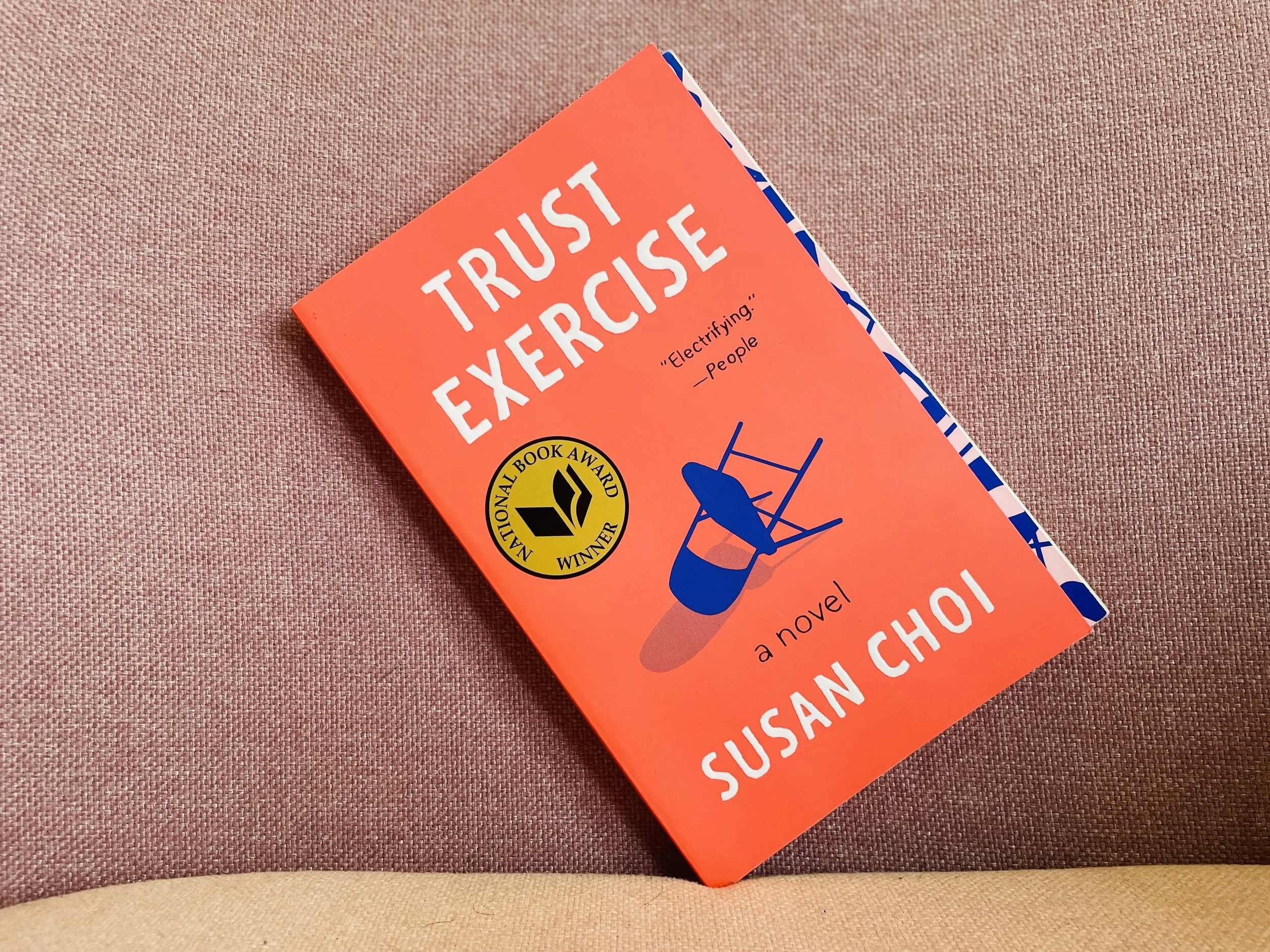
‘Trust Exercise’ by Susan Choi

Trust Exercise

September 26, 2026

Review: 4.5 stars

This one was recommended by my sister, who I trust with book recommendations wholeheartedly.

Trust Exercise follows Sarah and David, two impressionable drama students at an elite performing arts high school. They are pushed to their full potential by Mr. Kingsley, a teacher who humiliates his students in order to hone their acting into a sharp weapon. The first part of the book is extremely readable - the romantic tension between Sarah and David, the mystique of Kingsley and his inappropriate closeness to his students. It's a magnetic story.

But what makes this book truly amazing is the reframe in the second part, when you find out that Sarah has written a novel about her own past life, and in doing so has leveraged Karen's lived experience, rounding off its edges, and turning it into a bestselling novel. Karen's real life tragedy is expunged from Sarah's narrative, and she is relegated to a supporting character in Sarah's novel, but the source material is Karen's onw life. Suddenly the book isn't about what you thought it was about at all.

What's fascinating is how many angles of trust Choi explores. Most literally through the trust exercises themselves, which wring such extreme truths out of these kids that embarrassment becomes a bonding agent, tying the students to Kingsley with something close to hostage-level loyalty. Then the deeper, thornier question: who can be trusted with your story? What happens to the truth of what you lived when someone else remembers it differently, or appropriates it outright and reshapes it?

And then the third part arrives, with its unknown woman, and casts the first two parts into chaotic relief. Choi leaves it unresolved, and you begin to question everything. Who really owns this story? Are Sarah and Karen actually two sides of the same person? Can you even trust your own memory, or do traumatic experiences force you to compartmentalize, splitting your lived experience as a coping mechanism, a way to rebuild trust in yourself?

At face value this is an easy, propulsive, compelling novel. But if you choose to follow the rabbit hole, it becomes extremely cerebral. That duality is what makes it brilliant: it forces you to question every facet of trust, starting with the trust you placed in the narrator on page one.
In fiction Tags millennial, national book award, asian literature, acting, romance, 4.5 stars

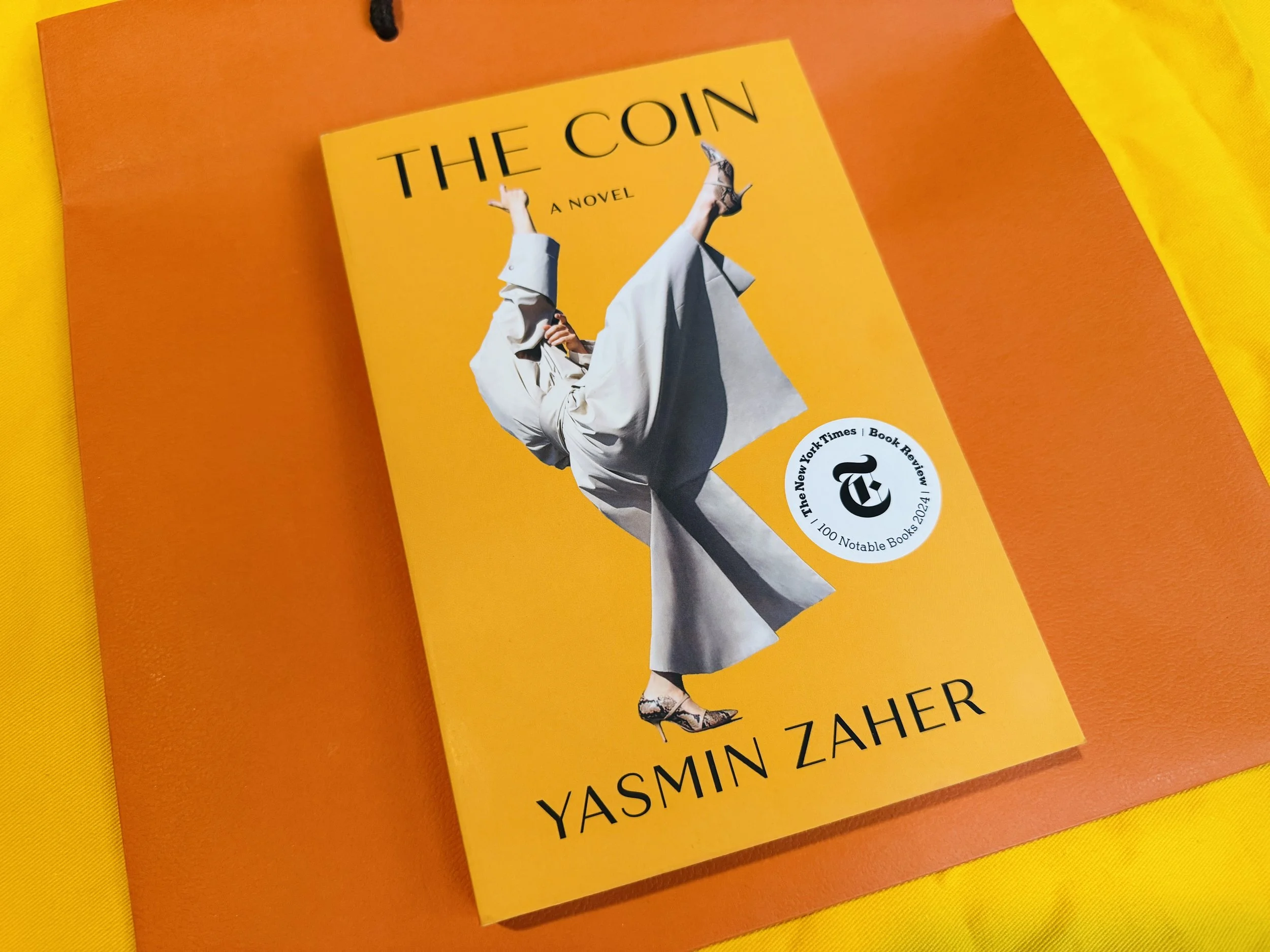
‘The Coin’ by Yasmin Zaher

The Coin

January 12, 2026

Rating: 4.5 stars

As I was flying out of SFO over winter break, I stopped by Compass Books, a well-curated Barnes & Noble independent offshoot. While my kids roamed around, I made my way through the fiction section and came across The Coin. In one simple word, it was fabulous.

The Coin follows a young Palestinian woman living in New York, whose life begins to unravel as her relationship to money, cleanliness, beauty, and power turns increasingly obsessive. Through her work as a teacher and her entanglements with wealth and luxury, the novel examines how identity fractures when control becomes a substitute for meaning.

The novel feels deliberately deranged—a controlled descent into obsession. Zaher fixates on filth and cleanliness and on the unbearable discomfort of believing there is a coin lodged inside her body, resisting logic or medical resolution. The narrator’s CVS Retreat ritual of scrubbing her body for several hours with multiple drugstore detergents, is her attempt at treatment. Her descriptions of curdled skin, soap, dirt, and residue after a bath are visceral - the refuse is her. Why do we become disgusted by what has molted from our bodies, when moments earlier it was an invisible layer inseparable from the self? “I was flushed, clean. I had shed what needed to be shed. At the end of the day it was just garbage. But I had oiled and spiced it up like it was a celebratory leg of lamb.”Paradoxically, as her cleaning compulsions intensify, she begins to intentionally soil both her physical appearance and her reputation.

The coin itself becomes the quiet center of the novel: a lodged object that refuses to be expelled. It represents what cannot be scrubbed away—trauma, class anxiety, displacement, the uneasy inheritance of money and power. Her fixation on cleanliness feels less about hygiene than about control, the hope that if every contaminant is eliminated, something unbearable inside her might finally disappear. The novel insists otherwise.

She moves through men she does not love, yet allows herself to be used, despite her apparent fluency in beauty, class, and their unspoken rules. That contradiction comes into focus with Trenchcoat, a luxury-goods arbitrager she pursues romantically. Through him, she enters a Hermès resale scheme governed by a logic that feels more fixed than nature itself: “Every year, regardless of poverty, war, or famine, the price of the Birkin bag increases.” What begins as satire settles into something colder—luxury as a closed system, impervious to consequence.

The novel reminded me of The Bell Jar—another young woman’s attempt to understand herself beyond accepted norms. While it was gendered expectation for Esther Greenwood’s character, for our narrator in The Coin, wealth, fashion, and education are the catalysts of her undoing. Later on in the novel, the garden she transforms her apartment into becomes an attempt at rebirth. She tries to become one with the earth, and as a reader you feel the devastation of beauty returning to something plain and repulsive. What begins vibrant and alive decays into an odorous heap of rot. Growth and decay are inseparable.

Overall, the writing is compulsively readable and frequently shocking. It reads as if Vogue briefly lost its mind, descended into literary madness, and then re-emerged without explanation. Zaher captures the absurdity of class, the intimacy of obsession, and the uncomfortable truth that self-knowledge does not always arrive gently, or leave us intact.

In fiction Tags strong female lead, palestine, new york city, NYT notable book, identity, 4.5 stars, classism
Comment

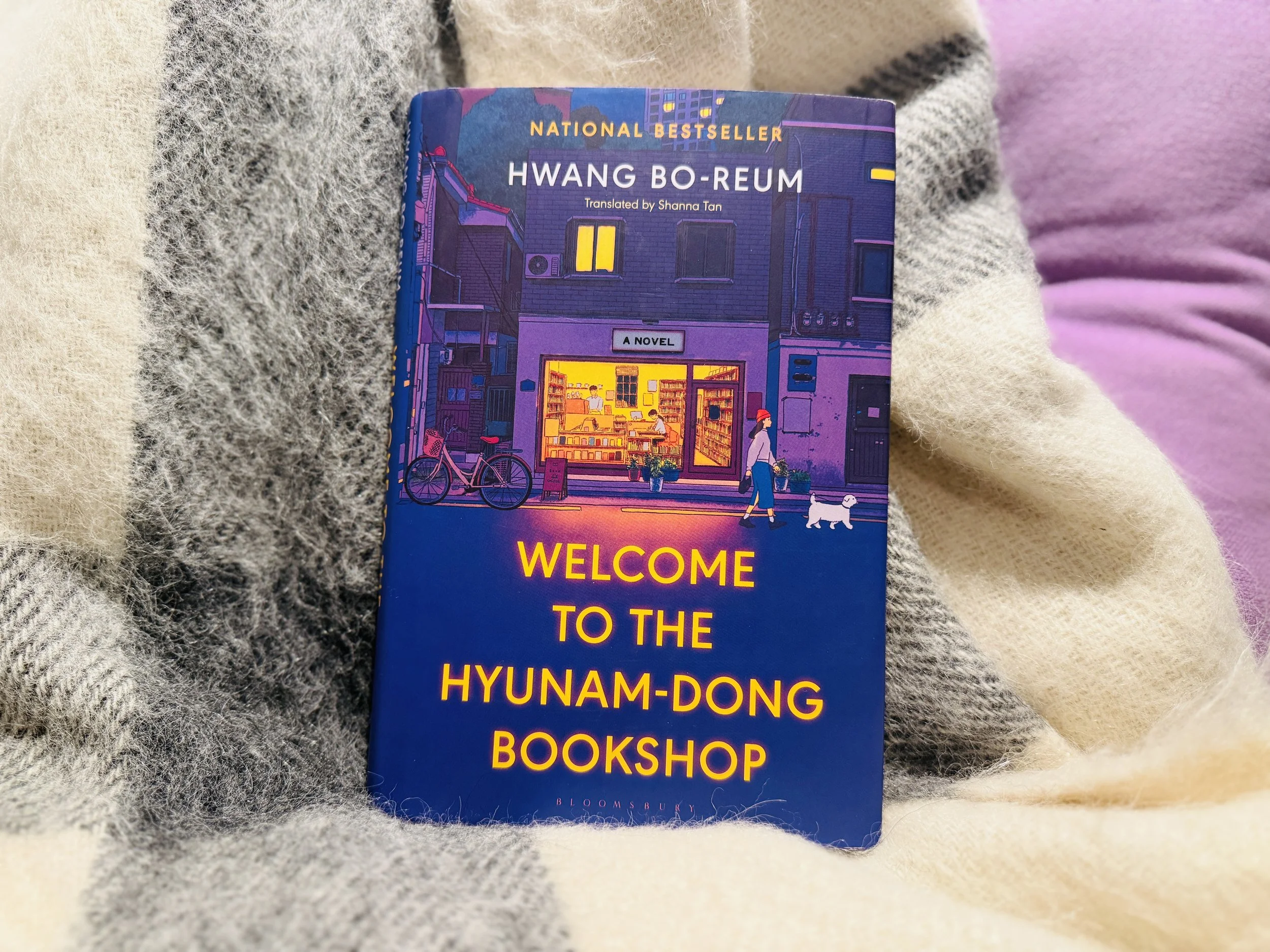
‘Welcome to the Hyunam-Dong Bookshop’ by Hwang Bo-Reum

Welcome to the Hyunam-Dong Bookshop

January 22, 2025

Review: 4.5 stars

Earlier in October, I was looking for a warm and cozy read - something that would be a salve for the soul. I adore books about booklovers, bookshops and writing, so when I saw ‘Welcome to the Hyunam-Dong Bookshop’ featured on the Foyle’s homepage, I knew I had to read it.

I had recently decided to make a career change, and had been musing about how the next chapter would fit with the life I desire to lead. Coincidentally, Hwang Bo-Reum’s novel about Yeongju, a burnt out working professional who opens a bookshop to heal her soul, perfectly captured my sentiments. “…[T]he problem is that our society is too obsessed with work, and working takes away too many things from us. “It’s like we surface from the depths of work to get a breather, only to feel thoroughly spent. And when we return home after a long workday, we no longer have energy for leisure time or hobbies…When significant proportions of our time are spent working, recuperating from work, compensating for work, or doing the many things necessary in order to find, prepare for, and hold on to work, it becomes increasingly difficult to say how much of our time is truly our own”. This quoted passage from David Frayne’s ‘The Refusal of Work’, perfectly encapsulates one of the key contemplations in the novel - how to rest and work intentionally, in harmony.

The book’s atmosphere comes through powerfully - a particular feeling was the driving force of the novel, instead of plot or formal character development. The writing appeared effortless, matter-of-fact, simple and clean. This helped evoke a tranquil, drifting quality to each passage. Even moments of conflict or apprehension have rounded edges, dulled by each character’s inner contemplation which we are privy to.

The cast of characters also befriends the reader, each in his or her way. Minjun, once a striving university graduate, settles into the role of the perfectionist barista. Sangsu becomes a begrudging book sommelier to bookshop patrons (as well as the cashier). Jungsuh, Mincheol, Jimi and Seungwoo, each with their quiet backstories, have revolving seats at the sparse tables in the bookshop. The rise and fall of each of their narrative arcs plays out amongst the comings and goings of the daily bookshop routine. I found myself at times casting judgement on a decision a character had made, and then actively and mindfully retracting my opinion. The book was a good reminder that each person is processing, and making progress at their own pace, towards their unique goals, even if staying still is part of that progress.

In the Author’s Note, Bo Reum writes: “I wanted to write a novel evoking the mood of…a space we can escape to, a refuge from the intensity of daily life where we can’t even pause to take a breather. A space to shelter us from the harsh criticisms whipping us to do more, to go faster. A space to snuggle comfortably for a day.” This book was a resting stone for me, and I hope it is for other readers who are seeking similar solace.

In fiction Tags fiction, mid-life crisis, healing, books, korean lit, 4.5 stars
Comment

Latest Posts

Featured
f2c13217f55f931dc62c8470c9d040902e701bc6b9827d05c31e24aad08c5b7a.jpg
iran, strong, womanhood, classism, culinary, 3.5 stars, protest
The Lion Women of Tehran
iran, strong, womanhood, classism, culinary, 3.5 stars, protest
Read more →
iran, strong, womanhood, classism, culinary, 3.5 stars, protest
Whistler
family, trauma, LGBTQ, daughterhood, fatherhood, 3.5 stars
Whistler
family, trauma, LGBTQ, daughterhood, fatherhood, 3.5 stars
Read more →
family, trauma, LGBTQ, daughterhood, fatherhood, 3.5 stars
Trust Exercise
millennial, national book award, asian literature, acting, romance, 4.5 stars
Trust Exercise
millennial, national book award, asian literature, acting, romance, 4.5 stars
Read more →
millennial, national book award, asian literature, acting, romance, 4.5 stars
IMG_7823.jpg
indigenous lit, emotional, childhood, truth and reconciliation, abuse, canadian lit, 4 stars
Five Little Indians
indigenous lit, emotional, childhood, truth and reconciliation, abuse, canadian lit, 4 stars
Read more →
indigenous lit, emotional, childhood, truth and reconciliation, abuse, canadian lit, 4 stars
Old Babes in the Wood
aging, grief, science, short, 2.5 stars
Old Babes in the Wood
aging, grief, science, short, 2.5 stars
Read more →
aging, grief, science, short, 2.5 stars
Yesteryear
social media, strong female lead, tradwife, 3 stars
Yesteryear
social media, strong female lead, tradwife, 3 stars
Read more →
social media, strong female lead, tradwife, 3 stars
IMG_5350.jpg
science fiction, apocalypse, LGBTQ, romance, culinary, 4 stars, asian literature
Land of Milk and Honey
science fiction, apocalypse, LGBTQ, romance, culinary, 4 stars, asian literature
Read more →
science fiction, apocalypse, LGBTQ, romance, culinary, 4 stars, asian literature
IMG_7820.jpg
strong female lead, palestine, new york city, NYT notable book, identity, 4.5 stars, classism
The Coin
strong female lead, palestine, new york city, NYT notable book, identity, 4.5 stars, classism
Read more →
strong female lead, palestine, new york city, NYT notable book, identity, 4.5 stars, classism
IMG_7810.jpg
war, national book award, palestine, journalism, 5 stars, emotional
One Day, Everyone Will Have Always Been Against This
war, national book award, palestine, journalism, 5 stars, emotional
Read more →
war, national book award, palestine, journalism, 5 stars, emotional
IMG_7809.jpg
fiction, mid-life crisis, healing, books, korean lit, 4.5 stars
Welcome to the Hyunam-Dong Bookshop
fiction, mid-life crisis, healing, books, korean lit, 4.5 stars
Read more →
fiction, mid-life crisis, healing, books, korean lit, 4.5 stars