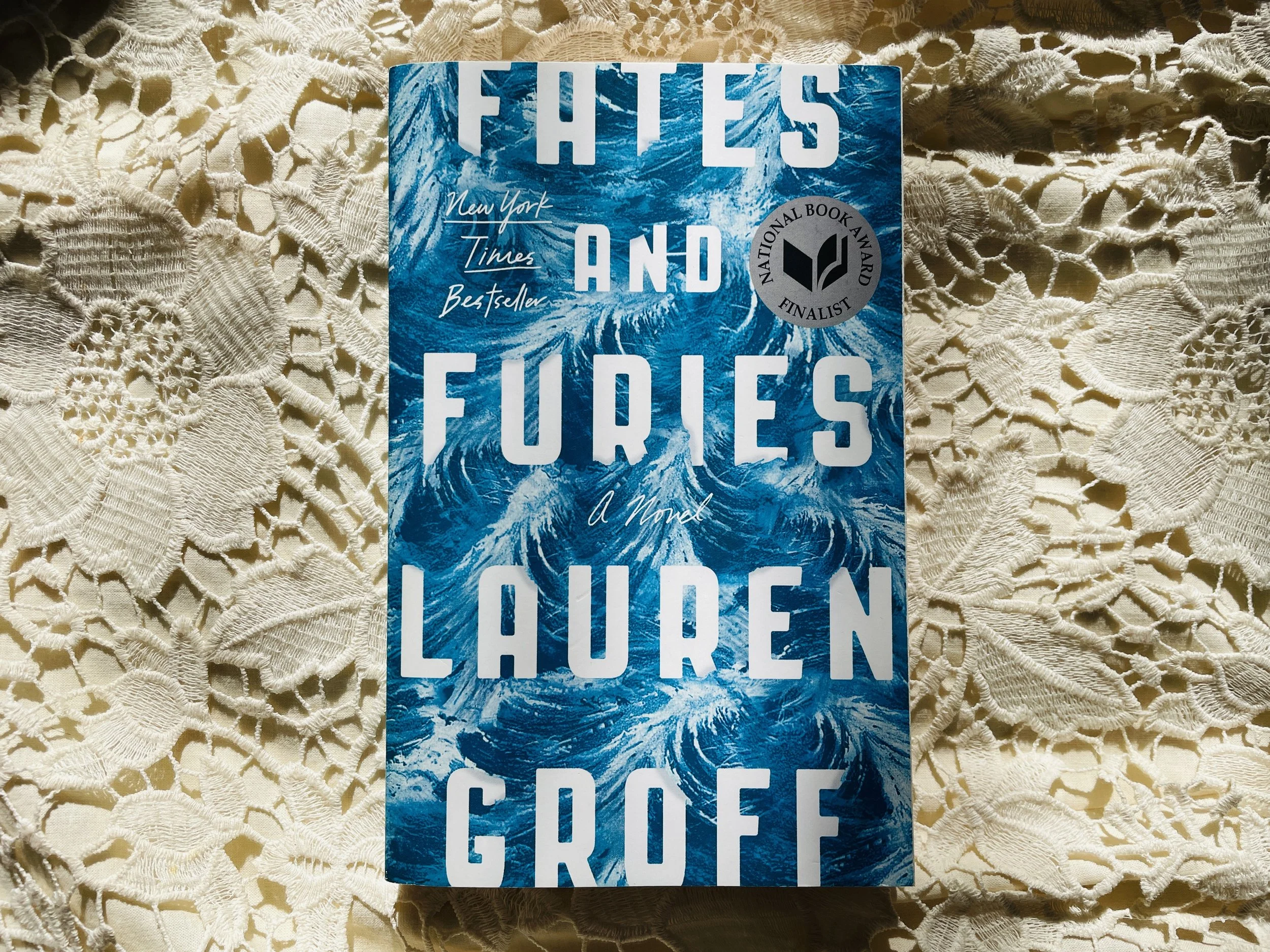
Review: 5 stars
I read ‘Fates and Furies’ several years ago, back in 2023, but never managed to write the review until now. I gifted it to my university friend, Patrick, as part of our annual holiday book exchange last year, which prompted me to revisit this gateway book that got me hooked on Lauren Groff’s writing.
‘Fates and Furies’ is a parallel telling of a marriage through two distinct voices: Lotto, a widely-hailed playwright, and Mathilde, his sharp-witted muse. The first half, ‘Fates,’ covers Lotto’s wild arc from high school heathen to lovesick white knight to brilliant but uneven playwright genius. It reads like a love story, or at least Lotto’s version of one. Then comes ‘Furies,’ told entirely from Mathilde’s point of view, and the floor drops out.
The reframe works because Lotto so completely misunderstands his own marriage. He sees Mathilde as his innocent, pure muse, the woman who unlocks his genius, never as a fully developed person except in foil to himself. So it lands as both surprise and satisfaction when ‘Furies’ reveals she has been orchestrating his success all along, her formidable intellect masked beneath his genius while a quiet fury simmers underneath. The muse takes back the narrative and gets the last word.
Running beneath that is a second, quieter contest: Mathilde versus Lotto’s mother, Antoinette, two women shaping Lotto’s fate without his knowledge while he floats through life convinced of his own charmed existence. When everything unravels at once, it breaks him.
Groff is choiceful in how the turmoil unfolds - she never undoes the genuine connection between Lotto and Mathilde. They are two people who fully loved each other without fully understanding each other. There is something deeply true in that: loving the unknowable in another person is essential to true love.
Then there is the writing. Groff’s square bracket asides give the whole book the feel of a Greek tragedy, and her sentences are endlessly quotable. My favorite comes near the end, when an older Mathilde lies in a porcelain bathtub and sees her life in the shape of an X: “From a terrifying expanse in childhood, life had focused to a single redhot point in middle age. From there it had exploded outward again…Now the shape of her life appeared to be: greater than, white space, less than.”
The closing has a lovely circularity, old trespasses quietly amended. I highly recommend it, and I want to reread it, since I am sure I would find so much more the second time through.