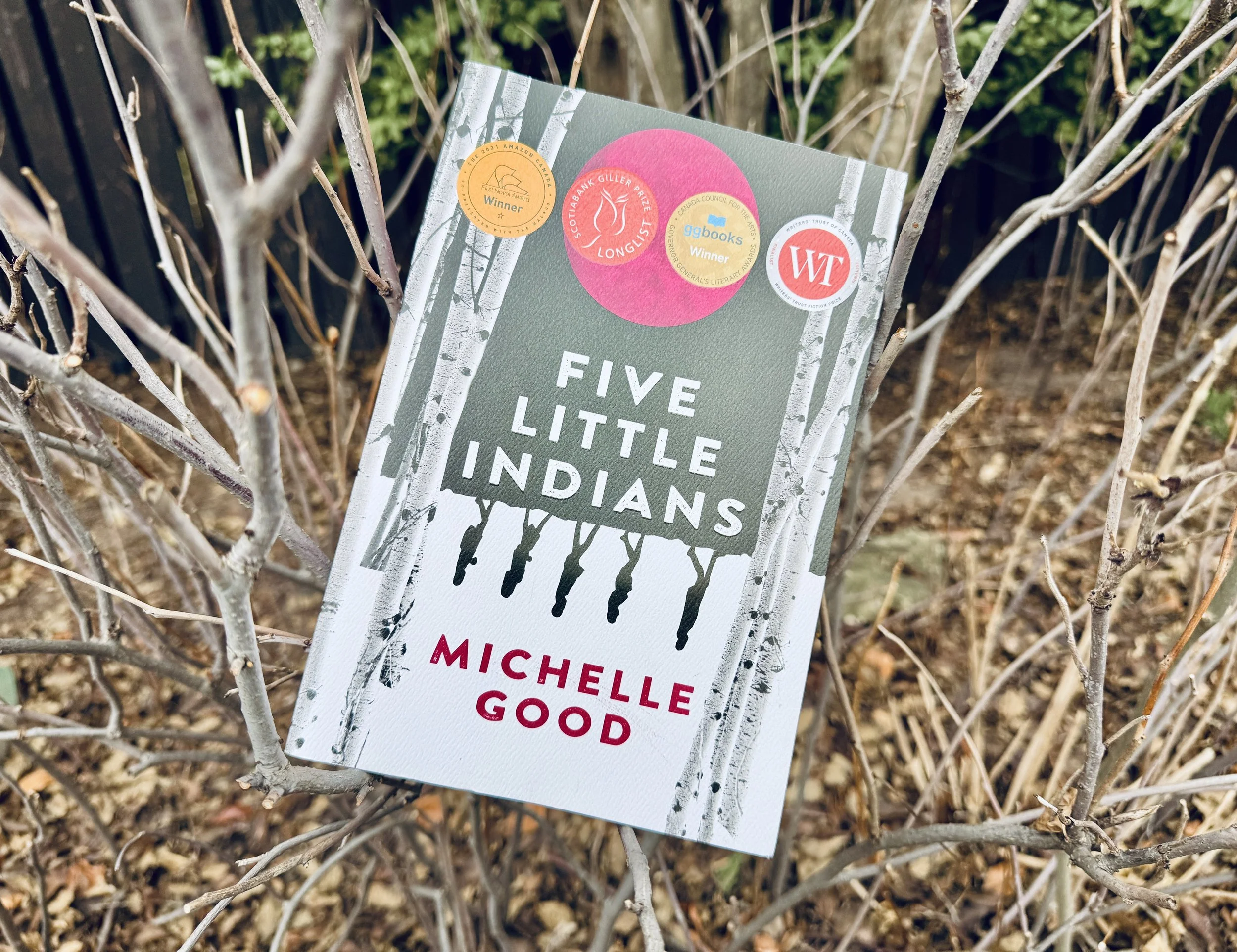
Review: 4 stars
This was Tanya's pick for my university girls' book club, which we read last fall, and the timing finally feels right to write about it: September 30 is the National Day for Truth and Reconciliation in Canada, and this is the book I would press into every Canadian's hands this week.
It was an extremely difficult read. I was born and raised in Vancouver, and growing up I spent a lot of time in Chinatown, trailing my parents as they picked up fresh vegetables and meat for the restaurant they ran. We always passed through the Downtown Eastside to get there. My pediatrician was at 475 Main Street, which on a recent visit home, I found lined with tents and makeshift shelters. It has always been a hard area to look at directly. But reading the stories of Kenny, Lucy, Clara, Howie, and Maisie, five residential school survivors trying to stay alive in that same neighborhood, changed the way I pass through it - with less prejudice and caution, and more curiosity. The book asked me to see individuals, not masses.
The book reminded me of A Little Life, one of my favorite novels, in the way Michelle Good is unrelenting about lived experience in all its harshness. No softening, no looking away: the bleakness, the compounding trauma, the way a person's history quietly sets the ceiling on what they believe they're allowed to be. Maisie's story was the hardest to sit with, the brutality of it, how completely her sense of self and reality had been warped by the schools. All five of them grew so accustomed to loss, to people leaving without warning, to nobody being on their side, that doing something as ordinary as living a normal life required them to be almost extraordinary.
It also left me humbled by how little I knew, and honest about something uncomfortable: I don't know how to teach my own children about this yet. The brutality makes it hard. You want them to understand how much they have compared to the children who were taken, and the comparison is so jarring it barely feels shareable. That's not a reason to look away, but it is a real tension I sat with.
My favorite arc was Clara's: surviving, finding her roots, returning to her community without apology to serve it and lift it up, and finally arriving at her own quiet life. It sounds like such a simple list of wants. Community, support, love, living into your forties and fifties. But nothing on that list can be taken for granted in a community with this heritage of abuse, this history of having identity stripped away. Clara earning the ordinary felt like the most radical ending in the book.
I highly recommend it to Canadians, especially right now. And take it slowly. Don't rush through it. Sit with what it means to be Canadian, a country built on the shoulders of this past.