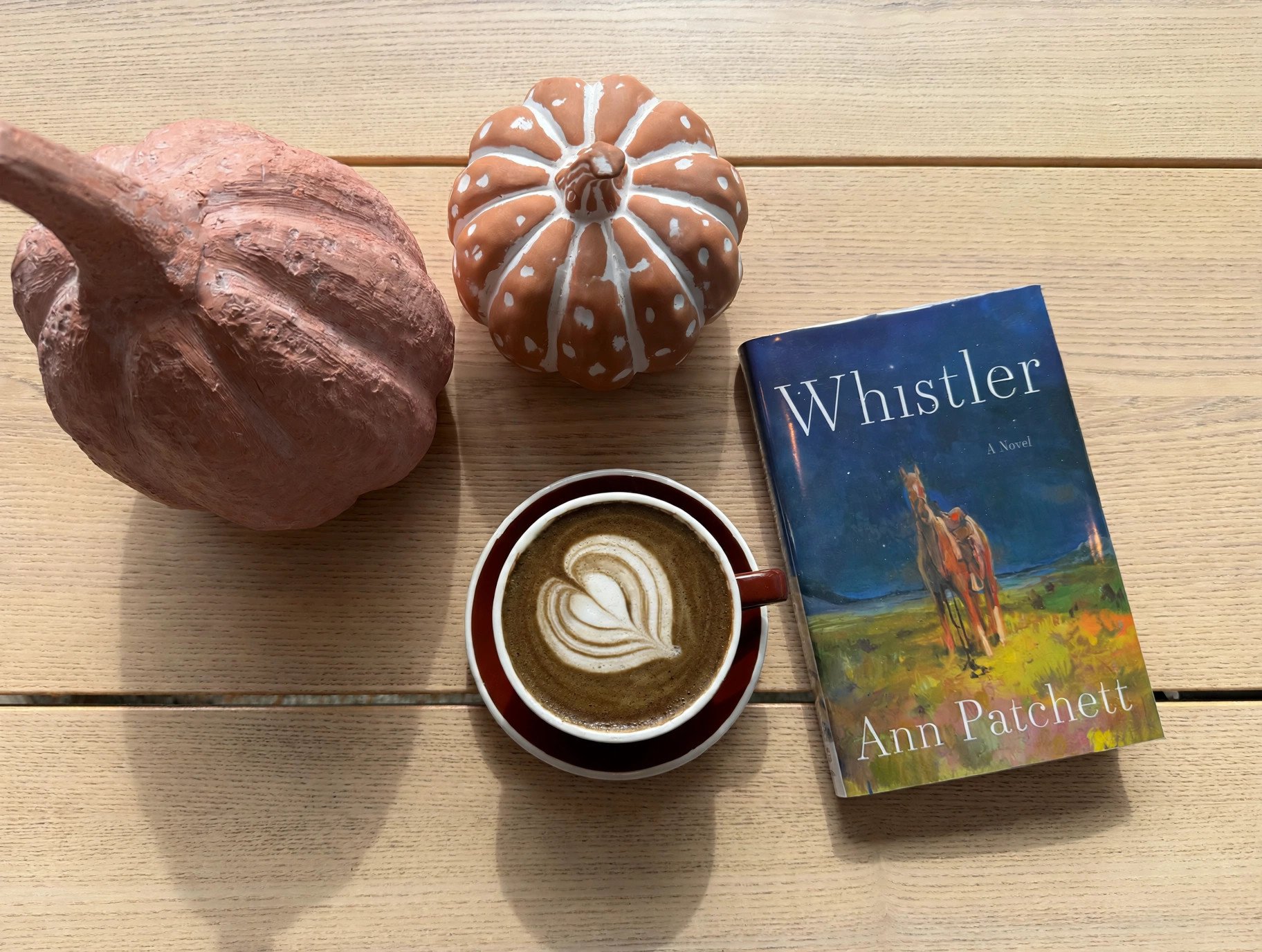
Review: 3.5 stars
Earlier this year I joined a second book club. One of my ex-co-workers gathered a group of stellar, smart women, and every two months we come together to talk through some of our most anticipated reads. This round’s selection was Ann Patchett’s ‘Whistler’, and I finished it well ahead of our November discussion.
I liked this one more than Pachett’s ‘The Dutch House’, though I will say upfront that it is not a book with a propulsive plot line. It begins when our narrator, Daphne Fuller, is reunited with her estranged stepfather, Eddie Triplett, at the Met in New York. Through a series of flashbacks, we learn about Daphne’s car accident - the one that came just before Eddie abruptly vanishes from her life. The novel draws you into the delicate relationship between stepfather and stepdaughter, weaving throughout the small pops of joy that can truly only come when conversing with someone who deeply understands you.
Daphne belongs to three fractured families at once, anchored by her mother, an effervescent parent. The novel explores Daphne’s varied relationships with her now-deceased biological father Buddy, her adoring stepfather Eddie, and her mother’s third husband, Lucas Ekker. In the present, she and her husband, Jonathan, are moving through their fifties and sixties, contemplating purpose, time and grief.
The book sits inside big questions without ever resolving them. What comes next. Whether there is an in between as you near death. What it means to be remembered. Near the end there is a beautiful scene of circularity at the Met that left me wondering about the chapters I had just traversed, whether they were the beginning or the end. At various points, the novel challenges whether life is best remembered through the things we leave behind. Orphaned belongings reveal morsels of a life lived, a memory resurrected. When someone exits a life unexpectedly, each object is both full of sentimental weight and none at all, a burden of unresolved feelings and unhad conversations.
For some readers, this novel may feel slow moving, overly contemplative, very much an inner voice expressed through vignettes of a life. It is the story of someone with purpose and a dream not yet fulfilled, working to make sense of her own life in the context of others. It is a story of relationships, those that are superficial, those that are honest, and those that are never how you want them to be, and in the end that is okay too.
After closing the final pages, I came to realize that whoever you come across in life will never know your full story. Daphne is the only one who knew what happened before, during, and after the car accident. But she will never know the thoughts that raced through Eddie’s mind nor the pain he suffered in those moments. Each character carried a part of life kept hidden until exposed, and in the exposure you come to appreciate the life they have lived, the decisions they have made, and who they are in relation to you. Which raises the real question: once you know these other parts of someone, does it change who they are?
Similar to The Dutch House, this is a deep examination of a family portrait, everything visible at the surface and the icebergs beneath. A good read, but not great. I look forward to hearing what the other ladies make of it.